

The idea of turning sawdust into cat litter may sound simple: take a wood-processing by-product, compress it into pellets, and package the result. In practice, however, commercial production involves a series of decisions that determine whether the final product is merely a pellet or a genuinely marketable cat litter.
Wood species, particle size, moisture, additives, pellet density, cooling and screening can all influence the behavior of the finished litter. For companies that already have access to sawdust, wood chips or shavings, the opportunity is attractive, but the production process needs to be designed around the raw material rather than around a single machine.
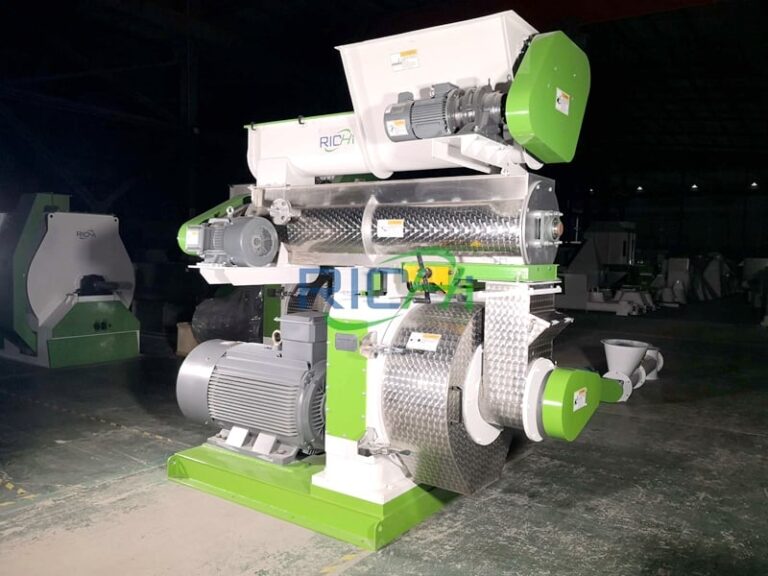
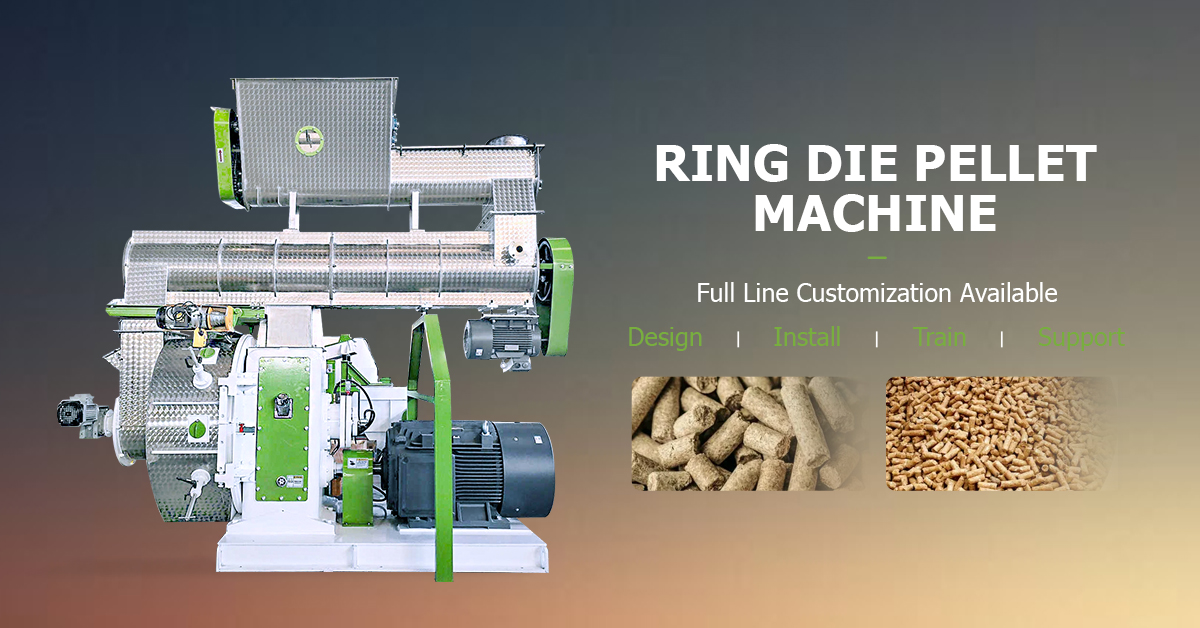

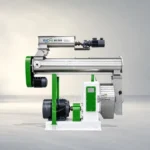
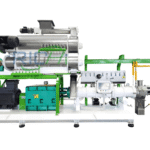
A well-planned Sawdust Cat Litter Making Machine can become the center of such a process, but it should be viewed as one component within a broader manufacturing system.
Why Sawdust Is an Interesting Raw Material
Wood-processing businesses generate a wide variety of residual materials.
A furniture factory may produce fine sawdust. A sawmill may have chips and shavings. A woodworking plant may have a mixture of particle sizes. A wood-processing company may also have bark-free offcuts that need additional size reduction before further use.
Instead of treating all of these materials as identical, manufacturers should classify them according to moisture, particle size and composition.
This first step can make a significant difference to the rest of the production process.
Fine, relatively dry sawdust may require little preprocessing. Larger chips may need crushing. Wet material may require drying before pelletizing. Mixed raw materials may need additional screening or separation.
The production line should therefore begin with a question:
What does the raw material look like today?
Not:
What machine should I buy?
That change in thinking can prevent unnecessary investment.
From Sawdust to Consistent Feedstock
Pelletizing works best when the feedstock has relatively consistent characteristics.
Large wood chips can create problems if they enter a pelletizing section without adequate size reduction. Very fine powder, on the other hand, may behave differently during feeding and mixing.
This is where a crusher or hammer mill becomes important.
For businesses starting with larger wood residues, a 2-3 T/H wood chip hammer mill for sale may be considered as part of the pretreatment section.
The exact capacity should not be selected independently. If the cat litter line will produce 1 T/H of finished product, installing grinding equipment designed for a substantially larger continuous flow may not always be necessary.
Likewise, if the business intends to expand into fuel pellets or other wood products, a larger grinding system may provide additional flexibility.
Does Every Sawdust Cat Litter Plant Need a Crusher?
No.
This is one of the most important distinctions for buyers.
If the raw material is already fine sawdust with an appropriate particle distribution, additional crushing may not be required.
However, if the plant receives wood chips, shavings, slabs or irregular residues, size reduction may become necessary.
The production line can therefore have several possible configurations:
Fine sawdust → drying → mixing → pelletizing
or:
Wood chips → crushing → drying → mixing → pelletizing
or:
Logs/branches → chipping → hammer milling → drying → pelletizing
The right process depends on the material available locally.
Why Moisture Is More Important Than Many Buyers Expect
Moisture is one of the variables that should be checked before pellet production.
If wood is too wet, the material may be difficult to pelletize consistently. If it is excessively dry, the material may also behave differently during compression.
A commercial plant therefore needs a controlled moisture strategy.
For companies receiving wet sawdust directly from a sawmill, an industrial sawdust dryer machine for sale may become one of the most important auxiliary investments.
The dryer should not simply be selected according to maximum evaporation capacity. The buyer should first determine:
- Initial moisture
- Target moisture
- Raw material throughput
- Heating source
- Available installation space
- Required automation
- Seasonal moisture variation
These factors determine the practical dryer configuration.
What Happens Inside the Pelletizing Section?
Once the raw material reaches a suitable condition, it enters the pelletizing stage.
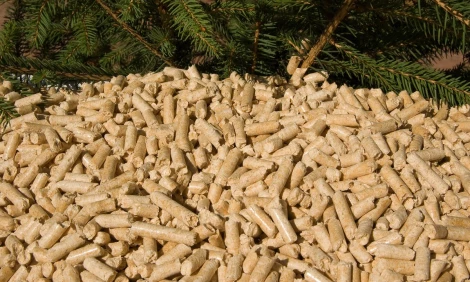
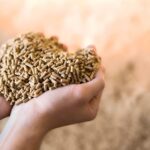
Under mechanical pressure, wood particles are compressed through die holes to form cylindrical pellets.
The natural binding characteristics of wood can contribute to pellet formation, although specific formulas may include additional ingredients depending on the product concept.
The target diameter also matters.
A manufacturer selling premium small-particle cat litter may require a different die configuration from a producer targeting larger wood pellets.
Therefore, the production objective should be established before selecting the die.
Why Density Matters for Cat Litter
A cat litter pellet should not be evaluated only by its appearance.
Users care about how it behaves when exposed to liquid.
Important characteristics can include:
- Absorption
- Breakdown behavior
- Dust generation
- Pellet strength
- Odor management
- Ease of handling
- Packaging stability
Pellet density can influence several of these characteristics.
A pellet that is excessively hard may behave differently from a more porous product. Conversely, a weak pellet may generate more fines during transportation.
The manufacturer therefore needs to find a suitable balance.
What Role Does Cooling Play?
Freshly produced pellets may leave the pelletizing section at an elevated temperature.
They need to be stabilized before packaging.
Cooling is not simply a cosmetic step. It can help reduce the temperature of the product and prepare it for downstream handling.
If hot pellets are packed immediately, condensation or packaging problems may occur depending on the production conditions.
A properly designed cooling section therefore contributes to product stability.
Why Screening Should Not Be Ignored
Not every pellet leaving the production machine will have exactly the desired size.
There may be fines, oversized pieces or broken pellets.
A screening section can separate different fractions.
This gives manufacturers another opportunity to control product consistency.
The fines may potentially be returned to the production process depending on the formulation and process design.
This creates a more efficient material cycle and can reduce unnecessary waste.
What Makes a Commercial Sawdust Cat Litter Plant Different?
A small workshop and an industrial cat litter factory may use similar basic principles, but their priorities are different.
A small operation may focus on:
- Simple operation
- Low initial investment
- Limited automation
- Easy maintenance
- Flexible raw materials
An industrial plant may prioritize:
- Continuous production
- Automatic dosing
- Centralized control
- Dust collection
- Stable product quality
- Automated packaging
- Production data monitoring
The production concept should therefore be matched to the business model.
Could a Wood Factory Produce Cat Litter?
Yes, and this is one of the more interesting applications.
A wood-processing company already has access to one of the most important inputs: wood residues.
Instead of selling sawdust at a low value or paying for disposal, the company can explore higher-value applications.
This does not mean every wood factory should immediately enter the pet-product market.
The business should first investigate:
- Local demand
- Competition
- Packaging requirements
- Product positioning
- Available raw materials
- Required investment
- Distribution channels
Equipment is only one part of the business model.
Can One Production Line Handle Different Wood Materials?
Potentially.
A flexible plant can be designed to accept different types of wood waste, provided the material characteristics remain within the operating requirements.
However, changing from one raw material to another may require adjustments to grinding, moisture control or formulation.
For example, pine sawdust may behave differently from hardwood sawdust.
Different wood species can also have different densities and physical properties.
This is why testing representative raw materials before finalizing equipment is useful.
Where Does a Pelletizing Specialist Fit Into the Project?
A complete project requires coordination between multiple stages.
A company such as Richi Pellet Machine may be involved not only in the pelletizing section but also in developing a broader production configuration.
The value of this approach is that the pellet machine is not treated as an isolated component.
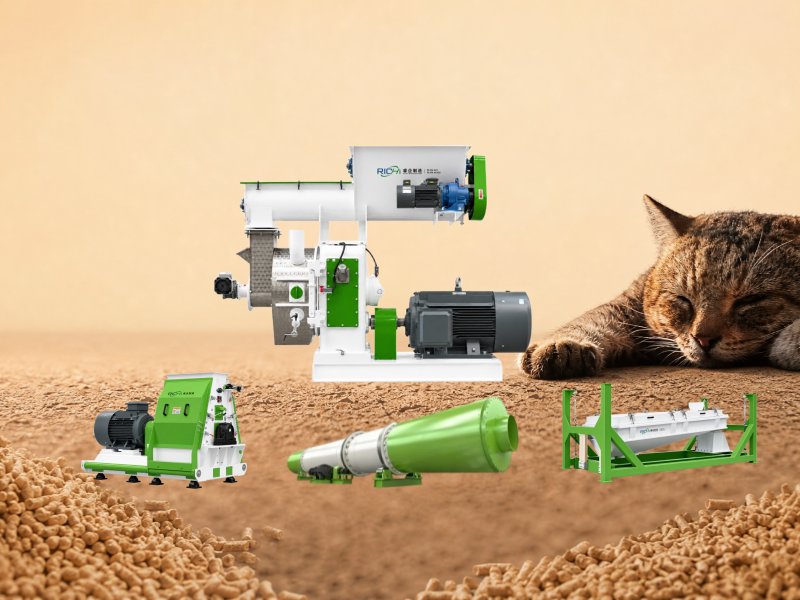
The crusher, dryer, mixer, pelletizer, cooler, screen and packaging system need to work together.
A Better Way to Plan the Investment
Instead of requesting the price of a single machine, buyers can prepare a simple production profile.
For example:
Raw material: pine sawdust and wood chips
Initial moisture: variable
Target production: 2 T/H
Pellet diameter: 6 mm
Finished product: wood-based cat litter
Packaging: 5 kg and 10 kg bags
This information gives an equipment supplier a much clearer picture of the project.
It also makes it easier to identify which machines are genuinely necessary.
From Waste Material to a Consumer Product
The most interesting aspect of sawdust cat litter production is not the pelletizing process itself.
It is the change in value.
A low-value wood residue can become a packaged consumer product with a defined specification, brand identity and distribution channel.
That transformation requires more than machinery. It requires process control, product development and market understanding.
Businesses researching the technical side of wood-based pet litter can discover this info here and use it as an additional starting point for evaluating production configurations.
Final Thoughts
A successful sawdust cat litter project starts with the raw material and ends with the customer.
Between those two points are several stages: size reduction, moisture control, mixing, pelletizing, cooling, screening and packaging.
Each stage has a specific purpose.
The best production line is therefore not necessarily the largest one or the most automated one. It is the configuration that matches the company’s raw material, target output, product requirements and investment plan.
For wood-processing businesses, this can create an interesting opportunity to turn an existing by-product into a more specialized product category.
The key is to design the process around the material and the final application rather than purchasing equipment first and trying to adapt the business afterward.