

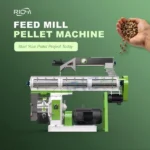
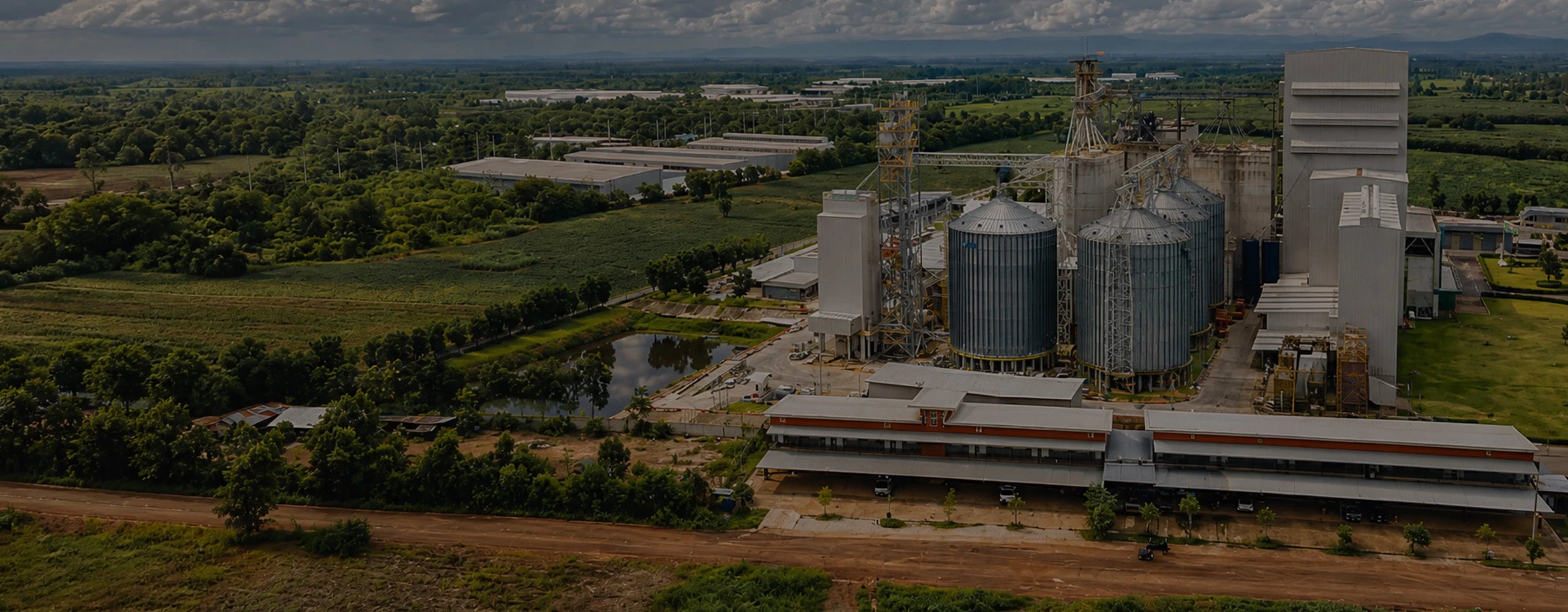
What Is a Livestock Feed Production Line?
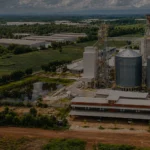
A modern feed mill is more than a group of machines connected by conveyors. It is an integrated process designed to turn different agricultural ingredients into consistent, nutritionally balanced feed products.
Depending on the type of animals being fed, a plant may produce poultry feed, pig feed, cattle feed, sheep and goat feed, or other livestock diets. Each product can have different requirements for raw materials, particle size, formulation, pellet diameter, and processing conditions.
The basic process often includes raw material receiving, cleaning, crushing, batching, mixing, conditioning, pelleting, cooling, screening, and packaging. However, not every plant needs all of these stages in the same configuration.
For a small farm, a relatively simple system may be sufficient. A commercial feed manufacturer serving several markets may require automated weighing, multiple storage bins, centralized control, steam conditioning, and automatic packing.
The most practical way to design a plant is therefore to start with the feed products and production targets, and then work backward to determine the equipment needed.
Which Raw Materials Are Commonly Used in Livestock Feed?
Feed ingredients vary according to the animal species, growth stage, nutritional requirements, and local availability of agricultural products.
Corn, wheat, barley, sorghum, and other grains are frequently used as energy sources. Protein ingredients may include soybean meal, rapeseed meal, cottonseed meal, peanut meal, and other oilseed by-products.
Fiber-rich ingredients can also be important, especially for ruminant diets. Alfalfa, grass meal, straw, corn stalks, and other forage materials may be processed before being incorporated into the formula.
Minerals and micro-ingredients can include limestone, salt, phosphate sources, vitamins, trace minerals, and other nutritional additives.
Some feed formulas also contain liquids such as molasses, oils, fats, or other additives. Their inclusion affects how the batching, mixing, and conditioning systems should be designed.
Because ingredient availability differs from one region to another, there is no universal raw material combination for every feed mill. A practical formula needs to consider both nutritional requirements and the characteristics of locally available materials.
What Are the Main Steps in Feed Production?
Although plant configurations vary, a typical feed manufacturing process follows a logical sequence:
Raw material receiving → cleaning → grinding → batching → mixing → conditioning → pelleting → cooling → screening → packing or bulk storage
Each stage has a specific function.
Cleaning protects downstream equipment by removing foreign materials. Grinding prepares ingredients for uniform mixing. Batching determines how much of each component enters the formula.
Mixing creates a homogeneous feed mixture, while conditioning prepares the material for pelleting when steam or moisture treatment is required.
Pelleting then compresses the mixture into a denser and easier-to-handle form. Cooling reduces the temperature and moisture of freshly produced pellets.
Finally, screening separates fines from finished pellets before the product is packed or transferred to bulk storage.
Understanding this sequence is essential when designing a livestock feed mill, because the capacity of each section needs to be compatible with the others.
What Does the Mixing Process Need to Achieve?
The purpose of mixing is to distribute all ingredients evenly throughout the batch.
This sounds straightforward, but different ingredients have different particle sizes, densities, moisture levels, and physical properties. These differences can make uniform mixing more difficult.
A suitable mixer needs enough capacity and an appropriate mixing mechanism to achieve the required uniformity within a reasonable cycle time.
Liquid ingredients can sometimes be added during mixing. When oils or molasses are part of the formula, spraying systems can help distribute them more evenly.
The mixing sequence may also need to be considered. Certain micro-ingredients are often pre-mixed or introduced under controlled conditions to improve distribution.
Good mixing is especially important when producing formulas containing relatively small quantities of high-value nutritional additives.
Is Steam Conditioning Necessary?
Steam conditioning is frequently used in commercial pellet production.
During conditioning, steam adds heat and moisture to the feed mixture. This can soften the material and improve its ability to pass through the pellet mill.
Appropriate conditioning can contribute to pellet durability and stable production. However, conditioning parameters should be adjusted according to the feed formulation and raw material characteristics.
A small feed plant may use a simpler configuration, particularly if it produces feed with relatively easy-to-pellet ingredients.
A larger plant with higher output and stricter pellet specifications may benefit from a more sophisticated conditioning system with controlled steam and moisture addition.
The objective is not to maximize conditioning temperature, but to create processing conditions suitable for the specific feed product.
How Does the Pelletizing Section Work?
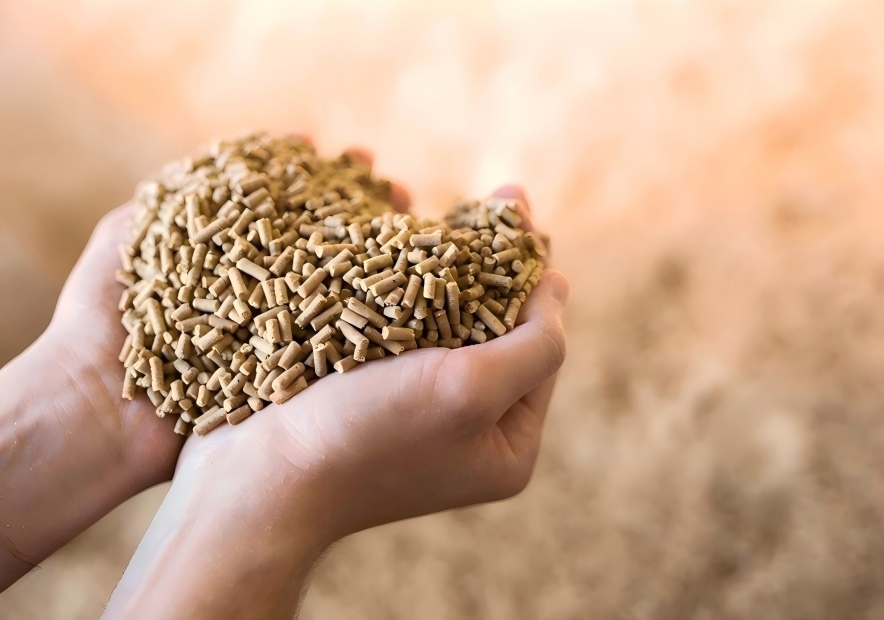
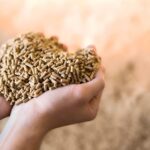
Pelleting is the stage where loose feed is transformed into compact particles.
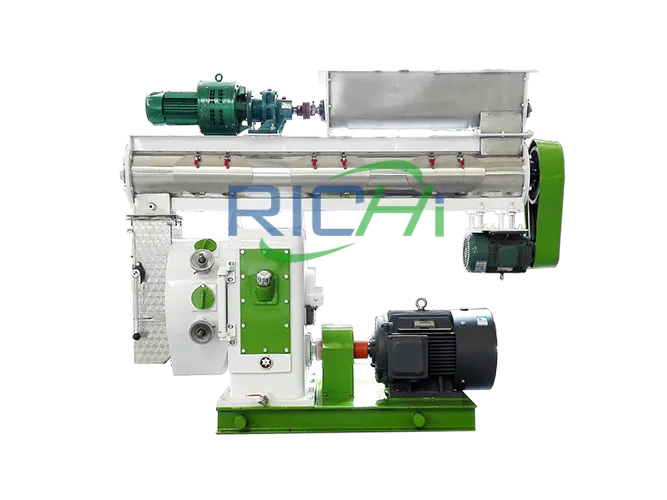
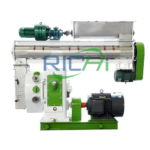
Prepared feed enters the pellet mill and is compressed through holes in a metal die. Rollers apply pressure to force the material through the die, after which cutting components determine the approximate pellet length.
Pellet diameter is largely determined by die-hole size. Different animal feeds may use different pellet diameters depending on the product requirements.
Pellet quality depends on more than the pellet mill itself. Moisture, temperature, particle size, formulation, conditioning, die condition, roller adjustment, and feeding rate all play a role.
This means that selecting equipment with a high theoretical capacity does not automatically guarantee high-quality pellets.
The surrounding process must supply the pellet mill with material at the appropriate condition and handle the finished pellets efficiently afterward.
Why Do Pellets Need to Be Cooled?
Freshly produced pellets are generally hot and contain more moisture than the desired storage condition.
If hot pellets are packed immediately, condensation and quality problems may occur during storage. Cooling helps reduce temperature while removing excess moisture.
Counterflow coolers are commonly used in commercial feed plants. Air moves through the pellet bed and removes heat and moisture from the product.
Cooling capacity should be matched with pellet mill output. If the cooler is too small, it can become a bottleneck even when the pelleting equipment has sufficient capacity.
This is an important example of why equipment should be sized according to the complete process.
How Large Should a Feed Plant Be?
Production capacity should reflect actual market demand.
A small farm producing feed for its own animals may only require a modest output. A regional feed manufacturer serving multiple farms may need several tons per hour, while a large commercial operation can require substantially greater capacity.
The calculation should consider expected annual demand, operating hours, maintenance periods, cleaning, product changes, and seasonal fluctuations.
It is also worth considering future expansion. A plant designed with reasonable room for additional storage or processing equipment may be easier to expand later.
However, building significantly more capacity than the business can use may tie up capital and reduce equipment utilization.
The right capacity is therefore a balance between present demand, realistic growth expectations, and investment requirements.
How Much Space Does a Feed Factory Need?
There is no standard workshop size because plant layouts differ according to capacity and process design.
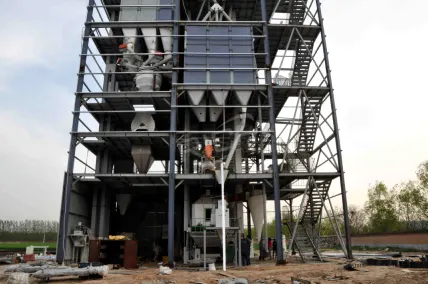
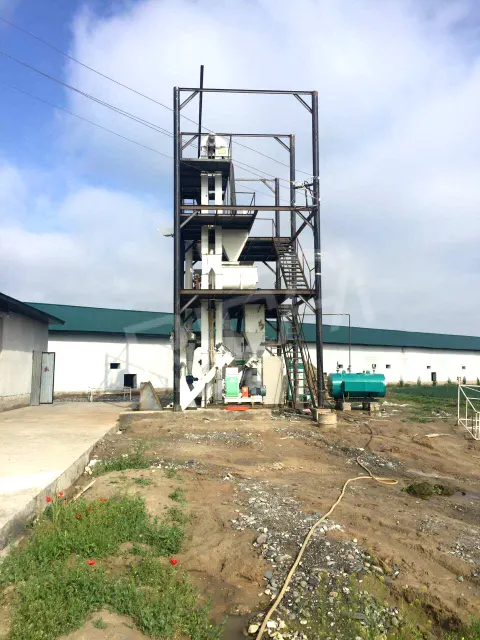
A small plant can use a relatively compact horizontal layout. Larger plants may use multi-level structures so that certain materials can move downward by gravity after being lifted.
The workshop needs enough space for equipment, conveyors, electrical cabinets, maintenance access, raw material storage, finished product storage, and safe operator movement.
Storage requirements can have a particularly large influence on the total footprint.
A plant purchasing raw materials in bulk may require silos or large bins, while a small operation receiving materials in bags may need more floor space for palletized storage.
Therefore, workshop planning should begin with the process flow and storage strategy.
Should Feed Be Stored in Bags or Silos?
Both approaches are widely used.
Bagged feed is convenient for retail distribution and smaller farms. Automatic or semi-automatic bagging systems can fill, weigh, seal, and transfer finished products.
Bulk storage is more suitable for certain large-scale operations because it can reduce packaging requirements and simplify handling.
Silos can be used for finished pellets or raw materials depending on the plant design. Conveyors, bucket elevators, and pneumatic or mechanical systems can then move material between different sections.
The appropriate storage method depends on customer requirements, transportation methods, available space, and production volume.
Packaging should therefore be planned together with the production process rather than added at the very end.
How Can Dust Be Controlled?
Grinding, conveying, screening, and material receiving can all generate dust.
A dust collection system can capture airborne particles at important dust-producing points and improve the working environment.
Larger feed mills may use centralized dust collectors connected to multiple machines. Smaller facilities may use localized collection systems.
Dust control also depends on regular housekeeping. Accumulated feed dust should not simply be allowed to build up around machinery.
During plant design, dust-producing areas should be identified in advance so that suitable extraction points can be included in the layout.
This approach is generally more effective than trying to solve dust problems after the plant has already been installed.
How Much Does It Cost to Build a Feed Plant?
The investment required for a feed plant depends on its capacity, automation level, equipment configuration, building conditions, and storage requirements.
A small feed line may contain only the essential processing equipment. A commercial plant can require multiple grinders, automatic batching, mixers, pellet mills, coolers, screeners, silos, packing machines, dust collectors, conveyors, and control systems.
Other costs may include civil construction, steel structures, electrical installation, transportation, equipment installation, and commissioning.
For this reason, comparing only the purchase price of a pellet mill does not provide a complete picture of project investment.
A better approach is to establish the required production capacity and process configuration first, then estimate equipment and infrastructure costs around those requirements.
Related Post: https://commercialpelletmill.com/cattle-feed-plant-cost/
How Long Does It Take to Build a Feed Production Line?
Construction time depends heavily on project complexity.
A basic small-scale system can be installed relatively quickly if the workshop, foundations, electricity, and other infrastructure are already prepared.
A larger automated plant requires more work. Storage structures, conveyors, electrical systems, control cabinets, dust collection, steam systems, and packaging equipment all need to be installed and commissioned.
A typical project can be divided into several stages:
- Feed and raw material analysis
- Process design
- Equipment selection
- Workshop preparation
- Equipment manufacturing
- Transportation
- Mechanical installation
- Electrical installation
- Trial operation
- Operator training
Starting workshop preparation early can help reduce delays once the equipment arrives.
What Level of Automation Does a Feed Mill Need?
Automation can improve weighing accuracy, process control, production records, and operator convenience.
However, more automation is not automatically better for every project.
A small farm may prefer a simple control system that is easy to understand and maintain. A large commercial manufacturer producing multiple formulas may benefit from centralized computer control and automatic recipe management.
Automation can also reduce repetitive manual tasks, particularly in batching and packaging.
When selecting an automation level, operators should consider the number of formulas, production capacity, labor availability, maintenance capability, and future expansion plans.
The most useful system is one that matches the actual complexity of the operation.
What Should Be Checked Before Buying Equipment?
Before contacting equipment suppliers, it is helpful to prepare basic project information.
This should include the intended animal species, feed formulas, major raw materials, expected production capacity, pellet specifications, operating hours, workshop dimensions, power supply, packaging requirements, and desired automation level.
It is also useful to understand whether raw materials will be purchased locally or transported from other regions.
The supplier can then use this information to propose a process flow and equipment configuration.
When researching a manufacturer’s background, production experience, and business scope, click to read the company’s About Us information before moving on to detailed equipment comparisons.
This kind of preliminary research can make later technical discussions more focused.
How Can Feed Equipment Be Maintained?
Regular maintenance is essential for stable operation.
Grinding equipment should be inspected for worn hammers and screens. Mixers require attention to bearings, paddles, shafts, and seals. Pellet mills need regular inspection of dies, rollers, bearings, lubrication systems, and other wear components.
Conveyors and elevators should also be checked for belt alignment, chain condition, bearings, and abnormal vibration.
Cooling and screening equipment should be cleaned and inspected regularly to prevent material buildup.
A maintenance schedule can help operators replace wear parts before unexpected failures occur. Recording operating hours and component replacement can also provide useful information for future maintenance planning.
In the long term, proper maintenance can be just as important as initial equipment selection.
What Are Common Mistakes When Planning a Feed Mill?
One common mistake is focusing too heavily on the pellet mill while overlooking the rest of the process.
A pellet mill cannot operate efficiently if the grinding, batching, mixing, conditioning, or cooling sections cannot keep up.
Another mistake is selecting capacity based entirely on theoretical machine output. Actual performance depends on raw material characteristics, formulation, pellet specifications, and operating conditions.
Insufficient storage can create another bottleneck. A plant may have enough processing capacity but still experience interruptions because raw materials cannot be received or stored efficiently.
It is also important to consider maintenance access, dust collection, electrical requirements, and spare parts before construction begins.
Good planning reduces the likelihood of having to modify the workshop after installation.
What Makes a Feed Production Line Practical?
A practical feed plant balances several factors rather than maximizing one of them.
Production capacity needs to match demand. Equipment should suit the raw materials. Automation should correspond to the complexity of the operation. Storage should support the production schedule, and the layout should provide efficient material flow.
The system should also be maintainable.
A technically advanced plant can become difficult to operate if local technicians cannot maintain the equipment or obtain replacement components easily. Simpler equipment can sometimes be more practical when operating conditions are limited.
For this reason, equipment selection should take the local environment and long-term operating requirements into account.
Final Thoughts
Planning a feed manufacturing plant starts with understanding the product rather than choosing machinery first.
Raw material characteristics, feed formulation, particle size, production capacity, pellet specifications, liquid ingredients, storage requirements, and packaging methods all influence the final process design.
A small farm may need only a straightforward system, while a commercial feed manufacturer may require automated batching, multiple processing lines, large storage facilities, steam conditioning, centralized dust collection, and automatic packaging.
There is also no single equipment configuration that is suitable for every project. The right solution depends on the type of feed being produced and the conditions under which the plant will operate.
When comparing suppliers, it is useful to examine their equipment range, engineering experience, process design capabilities, and previous project applications. Pellet Making Machine is one manufacturer that provides equipment and complete processing solutions for different feed and biomass applications.
Ultimately, a well-designed feed plant should not simply produce a large quantity of pellets. It should produce the intended feed consistently, handle raw materials efficiently, control operating costs, and remain practical to maintain over many years.
Starting with a clear understanding of the production requirements makes it much easier to determine which equipment, capacity, and level of automation are genuinely necessary.