


A poultry feed plant price is meaningful only when the equipment scope and finished products are defined. Two projects with the same hourly capacity can have very different investment requirements if one produces mash only while the other produces pellets and chick crumbles, uses automatic batching, includes silos and conveying, or requires a new multi-story building. Comparing a single headline price without these boundaries can lead to a misleading budget.
RICHI’s poultry feed plant pricing page presents turnkey reference ranges from 1 to 100 t/h, with an overall range of approximately USD 13,000 to USD 2.8 million. For example, the page lists USD 13,500–60,000 for 1–2 t/h, USD 60,000–200,000 for 3–4 t/h, USD 150,000–320,000 for 8–10 t/h and USD 1.8–2.8 million for 80–100 t/h. These are preliminary reference ranges, not a quotation or a universal price guarantee. The final cost depends on process, equipment configuration, automation, layout, site conditions and scope.
Compare the Same Production Scope, Not Just the Same Capacity
The first step is to define what the plant must produce. Mash feed may require cleaning, grinding, batching, mixing and packing. Pelleted feed adds conditioning, pelleting, cooling and screening. Chick crumbles require a crumbler and a suitable screening arrangement after cooling. If the plant makes several forms, the process flow and equipment list become more extensive than a mash-only line of the same nominal throughput.
Write a product schedule showing each feed type, formula family, pellet diameter or crumble size, daily quantity and expected share of total production. Include changeover frequency and whether the plant must run multiple formulas within one shift. This information determines the number of ingredient bins, mixer capacity, dosing arrangements, pellet mills and packing routes. A plant with a narrow product range may use a simpler configuration than one serving several poultry species and growth stages.
Also clarify whether the quoted capacity refers to raw-material intake, the main pellet mill, or finished saleable product. A line may have a press with a high nominal output but a smaller cooler, screen or packing section. When comparing prices, use the same definition of hourly output and the same finished-product requirements for every supplier.
Understand Which Equipment Is Included in the Price
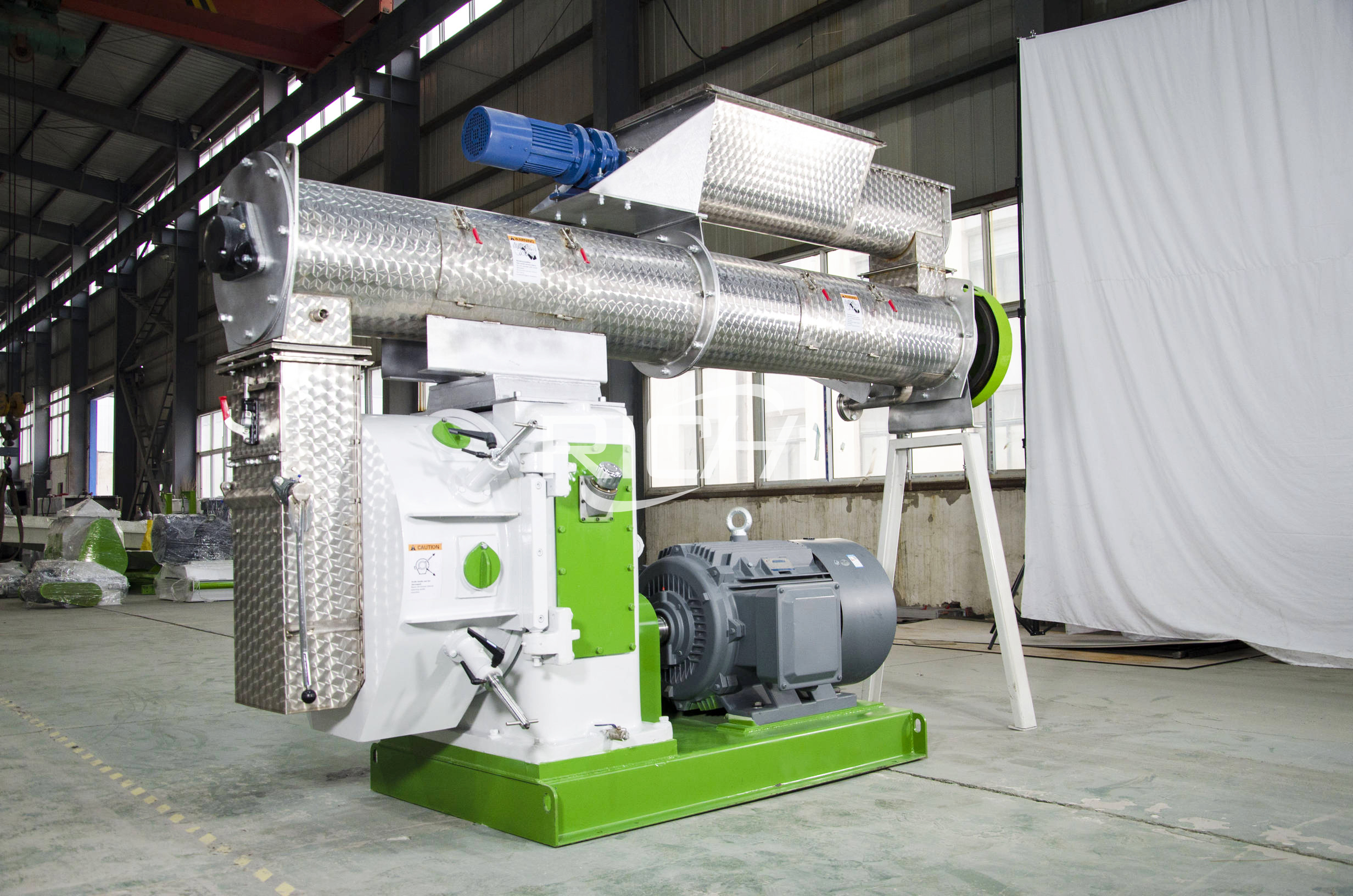
A complete quotation should identify receiving and cleaning, grinding, batching, mixing, liquid addition, conditioning, pelleting, cooling, crumbling, screening, conveying, dust collection and packaging as applicable. It should state the model and capacity of each major machine and identify which items are optional. If the offer includes only the pellet mill, it should not be compared directly with a turnkey line that includes upstream and downstream equipment.
The raw-material storage system can also change the budget. A small plant may use bagged ingredients and simpler storage, while a larger plant may need multiple silos, intake pits, elevators, conveyors and automated batching bins. Finished-product silos or bulk truck loading add another scope layer. Dust collection, electrical controls, platforms and steel structures can be significant cost items and should be visible in the equipment list.
Ask for a scope matrix showing supplier-supplied equipment, buyer-supplied items and excluded work. Typical buyer-side items may include land, building, civil works, transformer, external utilities, fuel system, installation lifting equipment and local permits, depending on the contract. An apparently low price can simply reflect a narrower supply boundary.
Automation Changes Both Capital Cost and Operating Work
Semi-automatic plants may use manual ingredient handling or weighing in some stages, with operators controlling transfers and packaging. This can reduce initial investment but increases labor dependence and may make formula changes more sensitive to operator practice. PLC-controlled batching and centralized monitoring require additional instruments, control panels, software configuration and commissioning, but can improve repeatability and reduce manual intervention.
The right automation level depends on production scale, formula diversity, labor availability, traceability needs and the cost of a weighing or mixing error. A small farm producing a limited number of formulas may not need a fully automated multi-bin system. A commercial feed mill supplying several customers and product types may justify automated batching to maintain consistency and throughput.
Automation should be evaluated as a system. A PLC panel does not make a plant fully automatic if ingredient feeding, liquid addition, finished-product routing or packaging still depends on manual operation. Ask which operations are automated, what sensors and weighing devices are included, how recipes are managed, and what training and support are provided.
Building Layout and Civil Works Can Shift the Investment
A horizontal single-story layout may suit a smaller plant or an existing building with adequate floor area. A multi-story or tower arrangement can use gravity to reduce some conveying requirements and footprint, but it needs structural steel, platforms, pits, access stairs and lifting provisions. The site may require excavation for a raw-material intake pit or foundations for silos and heavy equipment.
The layout should be designed around material flow, maintenance access, dust collection and future expansion. Confirm building height, floor loading, anchor positions, delivery routes, equipment removal paths and finished-product dispatch. A compact design that saves building space can increase equipment complexity or maintenance time if access is restricted.
Before accepting a quotation, identify whether the price includes process design, general arrangement drawings, foundation drawings, steel structure, installation guidance, commissioning and operator training. These items should be distinguished from civil construction and local contractor work. The buyer should also confirm which utility connections and cable runs are within the supplier’s scope.
Use Reference Investment Ranges Carefully
The published reference bands can help an investor decide whether a project is closer to a small farm-scale plant or a large commercial facility. The page lists 1–2 t/h at USD 13,500–60,000, 3–4 t/h at USD 60,000–200,000, 5–6 t/h at USD 80,000–250,000, 8–10 t/h at USD 150,000–320,000, 15–20 t/h at USD 240,000–600,000, 30–40 t/h at USD 600,000–800,000, 50–60 t/h at USD 900,000–1.4 million and 80–100 t/h at USD 1.8–2.8 million.
These bands overlap because the equipment configuration and scope vary. A 5–6 t/h mash-only plant may cost less than a 3–4 t/h line with more automation, silos, additional product routes or extensive packaging. The range should not be interpreted as a price curve where capacity alone determines the investment. Ask the supplier to explain which process, equipment and site assumptions sit behind the reference.
Project examples on the page also show why the scope matters. A 10 t/h poultry plant with PLC batching, grinding, mixing, pelleting, cooling, crumbling, screening and packaging has a different configuration from a 5–6 t/h mash plant with cleaning, grinding, mixing and bagging. Use case examples as scope references, not as direct price promises for a different country or site.
Build a Total Project Budget Beyond the Equipment Quotation
The equipment quotation is only one part of the investment. A complete budget may include land, building, foundations, steel structure, transformer, electrical installation, boiler or heat source, fuel storage, water supply, dust collection, external conveyors, installation lifting equipment, freight, import duties, local taxes and commissioning travel. The exact inclusions depend on the commercial terms and project location.
Operating cost should also be considered before selecting the configuration. Estimate electricity, steam or heat, labor, wear parts, maintenance, packaging, cleaning and raw-material handling. A more automated system may cost more initially but reduce labor or improve formula consistency. A simpler line may have lower capital expenditure but require more operators or manual material movement. Compare options over the expected operating life rather than on purchase price alone.
The project should also include working capital for raw materials, packaging and finished-product inventory. If ingredients are seasonal or purchased in bulk, storage and cash-flow requirements can be significant. If the plant sells to distributors, allow for finished-product storage and dispatch arrangements. These items do not always appear in a machinery quotation but affect the total capital required to start production.
Prepare a Comparable Enquiry Before Requesting a Final Price
A useful enquiry package includes target capacity, product forms, formulas or ingredient list, pellet and crumble dimensions, operating hours, raw-material supply, automation preference, site layout, available power and steam, storage requirements, packaging format and country of installation. If the project is an expansion, provide existing equipment information and identify what should be reused.
Ask suppliers to return a process flow, equipment list with model and motor ratings, layout, utility schedule, scope exclusions, installation and commissioning responsibilities, and a clear basis for the capacity estimate. Confirm whether the quotation includes one or multiple production lines, silos, steel structures, dust collection, packing and control systems. A structured enquiry makes proposals easier to compare and reduces late changes.
Conclusion: Make the Budget Match the Plant You Intend to Operate
Poultry feed plant price is driven by product form, capacity, equipment scope, automation, storage, layout, civil works and installation boundaries. The published RICHI investment ranges are useful for preliminary budgeting, but a reliable quotation requires a defined product portfolio and site-specific process design. Compare suppliers using the same equipment scope and finished-product output, not a headline capacity alone.
For the reference investment ranges and project configurations, review the RICHI poultry feed plant price guide. Prepare your product schedule, target output, automation requirements, site information and utility details to obtain a project-specific equipment list and quotation.