



For decades, livestock farmers have treated manure as a necessary evil—a smelly byproduct that requires constant management, poses environmental risks, and eats into operational budgets. However, a quiet revolution is taking place in the agricultural sector. What was once considered waste is now being re-evaluated as a high-value resource. The shift from disposal to utilization is not just an ecological trend; it is becoming an economic necessity. With fertilizer prices skyrocketing and soil degradation becoming a global crisis, the ability to convert organic waste into a stable, marketable product is a game-changer.
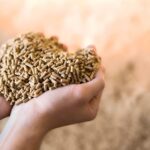
At the heart of this transformation is the humble pellet. By compressing raw organic matter into dense, cylindrical fuel or fertilizer, farmers can solve multiple problems at once. But how does this process work on an industrial scale, and what equipment is required to make it profitable?
The Science Behind the Solution
The principle is deceptively simple. Raw manure contains high moisture content and a heterogeneous mixture of fibrous materials. If applied directly to fields, it leads to nutrient runoff, pathogen spread, and unpleasant odors. Pelletization changes all of that. Through a combination of pressure, heat, and friction, the material is forced through die holes, creating a compact product that is easy to store, transport, and apply.
The benefits are threefold: first, the high temperature during processing kills weed seeds and harmful bacteria. Second, the density of the pellets allows for slow-release fertilization, meaning crops can absorb nutrients more efficiently. Third, and perhaps most importantly, pelleted manure is a viable alternative to firewood in regions where deforestation is a concern. The calorific value of dried manure pellets is surprisingly high, making them a sustainable fuel source for industrial boilers and household cooking.
Scaling Up for Commercial Success
While small-scale machines are suitable for family farms, the commercial sector requires heavy-duty solutions that can handle massive throughput. This is where industrial engineering meets agricultural need. For operations handling thousands of animals, the logistics of processing manure can be overwhelming. Without the right equipment, the manure pile grows faster than it can be utilized, leading to storage problems and potential fines for environmental non-compliance.
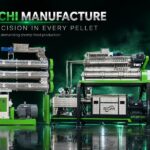
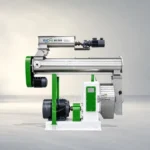
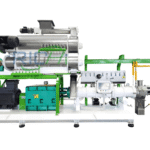

To meet these demands, manufacturers have developed robust systems capable of processing significant tonnages per hour. For instance, a 1-26 T/H poultry manure pellet machine is specifically designed to handle the unique characteristics of poultry litter, which tends to be more abrasive and have a higher nitrogen content than other types of manure. These machines are built with wear-resistant components to ensure longevity and consistent output. Investing in such a machine allows large-scale poultry producers to turn a costly disposal problem into a revenue stream, selling organic fertilizer back to the crop farming community.
The Role of Innovation in Manufacturing
The market for agricultural machinery is crowded, but not all equipment is created equal. The durability of the die, the efficiency of the motor, and the ease of maintenance are critical factors that determine the return on investment. In recent years, Chinese manufacturers have emerged as leaders in this space, offering high-quality machinery at competitive prices. Their ability to innovate rapidly has made advanced pelletization technology accessible to developing nations.
When sourcing equipment, reputation matters. One name that frequently surfaces in industry discussions is RICHI Machinery. Known for their comprehensive approach, they don’t just sell a machine; they provide complete solutions, including pretreatment systems, drying units, and packing lines. Their focus on customization ensures that the equipment fits the specific moisture levels and particle sizes of the client’s raw materials. This attention to detail is what separates a successful operation from one that struggles with constant blockages and inconsistent product quality.
The Economic and Environmental Payoff
Switching to a pelletization system is a capital-intensive decision, but the long-term economics are compelling. Consider the cost of synthetic fertilizers, which are largely dependent on volatile natural gas prices. By producing your own organic fertilizer, you insulate your farm from global market shocks. Furthermore, the premium price that organic produce commands in the retail sector often justifies the investment in on-farm processing.
Environmentally, the impact is profound. Methane emissions from decomposing manure are a significant contributor to greenhouse gases. By processing the manure into pellets, you stabilize the carbon and prevent the release of methane. Additionally, the concentrated nature of pellets means fewer truckloads are needed to transport the fertilizer, reducing the farm’s carbon footprint. It is a closed-loop system that aligns with the principles of circular agriculture.
Choosing the Right Configuration
Navigating the options can be daunting. The choice of a pellet mill depends on several variables: the type of livestock, the desired moisture content, and the intended use of the final product. For fuel pellets, a higher density and lower moisture content are required. For fertilizer, maintaining the biological activity of beneficial microbes—while still eliminating pathogens—is a delicate balance.
Farmers should also consider the pre-processing stage. For those specifically dealing with bovine waste, a cow dung pellet machine offers specialized features to handle the high fiber content and stickier consistency of cattle manure, ensuring smooth operation and reduced wear on the die. A hammer mill or a crusher is often necessary to achieve a uniform particle size before the material enters the pellet chamber. If the manure is too wet, a dryer is an essential companion piece. The synergy between these components determines the overall efficiency of the plant. A poorly configured system can double the energy consumption per ton of output, wiping out any potential profits.
Success Stories from the Field
Early adopters of this technology are reaping significant rewards. In regions of Europe where strict nutrient management laws are in place, farmers have used pelletization to stay compliant while improving their soil structure. In Asia, smallholder cooperatives have pooled resources to purchase communal machines, allowing them to produce branded organic fertilizer for the export market.
These success stories highlight a crucial point: this technology is not just for the wealthy. With the right financing models and government subsidies for green technology, even medium-sized farms can make the transition. The key is to view the expense not as a cost, but as an investment in the future viability of the land.
Looking Ahead
The future of agriculture relies on our ability to do more with less. As the global population grows, we must find ways to produce food without destroying the ecosystems that support us. Manure pelletization is a prime example of human ingenuity solving a complex problem. It transforms a pollutant into a tool for regeneration.
Whether you are a dairy farmer looking to manage slurry or a poultry producer seeking to diversify income, the path forward is clear. The technology is mature, the market is growing, and the benefits are tangible.
Ultimately, the decision to integrate a pellet production line is a decision to embrace sustainability as a core business principle. It signals to consumers and regulators that you are a forward-thinking operator. So, the next time you look at the manure pile, don’t see a problem—see an opportunity. With the right partners and the right machinery, you can power your farm and feed the world, one pellet at a time.
view more:https://pelletizerextruder.com/cow-dung-pellet-making-machine/