


A feed factory serving only one type of livestock can be relatively straightforward to organize. But businesses that supply multiple animal species face a much more complicated challenge.
Rabbit feed may require a different pellet size from goat feed. Alfalfa-based products may require different preparation from grain-heavy formulas. One customer may need a small batch while another requires several tons every hour.
The solution is not necessarily to build separate factories.
A flexible production system can allow one facility to manufacture different feed products while maintaining acceptable efficiency and quality.
The key is designing the process around the differences between feed formulas.
Why Flexibility Matters in Feed Manufacturing
Animal feed markets are rarely static.
A manufacturer may initially produce feed for one customer group and later expand into other species.
For example:
Stage 1: Rabbit feed
Stage 2: Goat and sheep feed
Stage 3: Alfalfa-based forage products
Stage 4: Additional livestock formulas
If the original factory is too specialized, expansion can become expensive.
A flexible design can provide room for growth without requiring a completely new facility.
What Makes Different Feeds Different?
The differences begin with the ingredients.
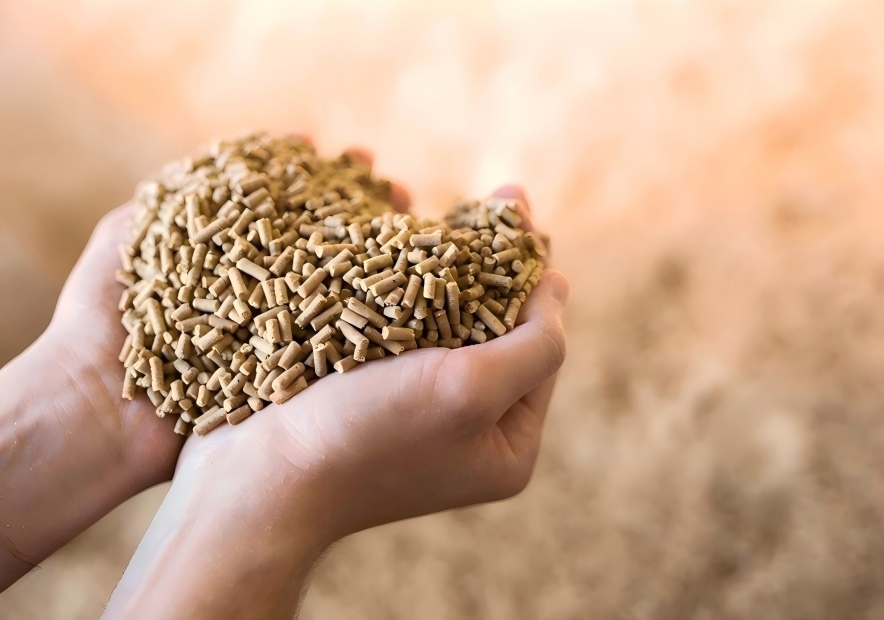
Rabbit feed may contain significant amounts of forage and fiber. Goat feed can combine forage, grains, protein ingredients, and minerals. Alfalfa pellets may contain relatively few ingredients but require careful fiber preparation.
These differences affect:
- Grinding
- Mixing
- Moisture
- Conditioning
- Pellet diameter
- Compression
- Cooling
- Packaging
Therefore, a flexible factory needs more than a flexible pelletizer.
The entire material flow must be considered.
The Raw-Material Receiving Area
The first section of a feed factory is where ingredients enter the plant.
Materials may arrive in:
- Bags
- Bulk trucks
- Bales
- Big bags
- Other containers
Different ingredients may require different unloading and storage methods.
Grains can often be stored in bins or silos, while hay and alfalfa may require separate storage arrangements.
Good receiving logistics prevent the production line from being interrupted by raw-material handling problems.
Grinding Different Ingredients
A flexible feed factory needs to process materials with different physical characteristics.
Corn kernels, wheat, soybean meal, hay, and alfalfa cannot necessarily be processed using identical grinding settings.
A hammer mill or other grinder should therefore be selected according to the ingredient mix.
For fibrous materials, the goal is usually to reduce excessive fiber length while preserving suitable material characteristics.
For grains, particle size may need to be controlled more precisely according to the formula.
The grinder should therefore be considered part of feed formulation management.
Batching Is the Foundation of Formula Accuracy
Once ingredients are prepared, they need to be weighed.
This becomes particularly important when producing multiple formulas.
Suppose one formula contains a high proportion of alfalfa while another contains more grain. Manual weighing can increase the risk of errors when production volume becomes large.
Automated batching systems can improve consistency.
They can store different recipes and control the amount of each ingredient added to a batch.
This allows the same factory to switch between formulas without redesigning the entire production process.
Mixing: Where Flexibility Becomes Practical
A good mixer should handle different ingredient proportions while producing a consistent blend.
The mixing sequence may change depending on the formula.
Micro-ingredients such as minerals or additives may need to be incorporated carefully so that they are distributed evenly.
The mixer should also minimize segregation after blending.
This becomes particularly important when the material travels from the mixer to the pelletizer.
Pelletizing Different Products
The pelletizing stage must be flexible enough to accommodate different feed specifications.
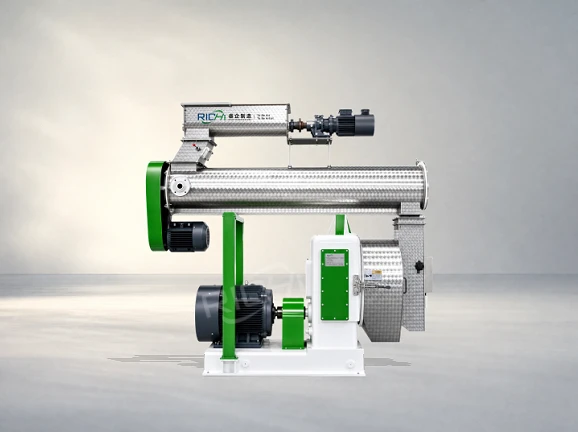
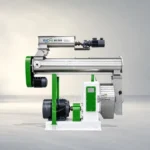
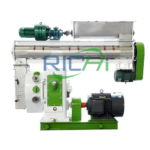
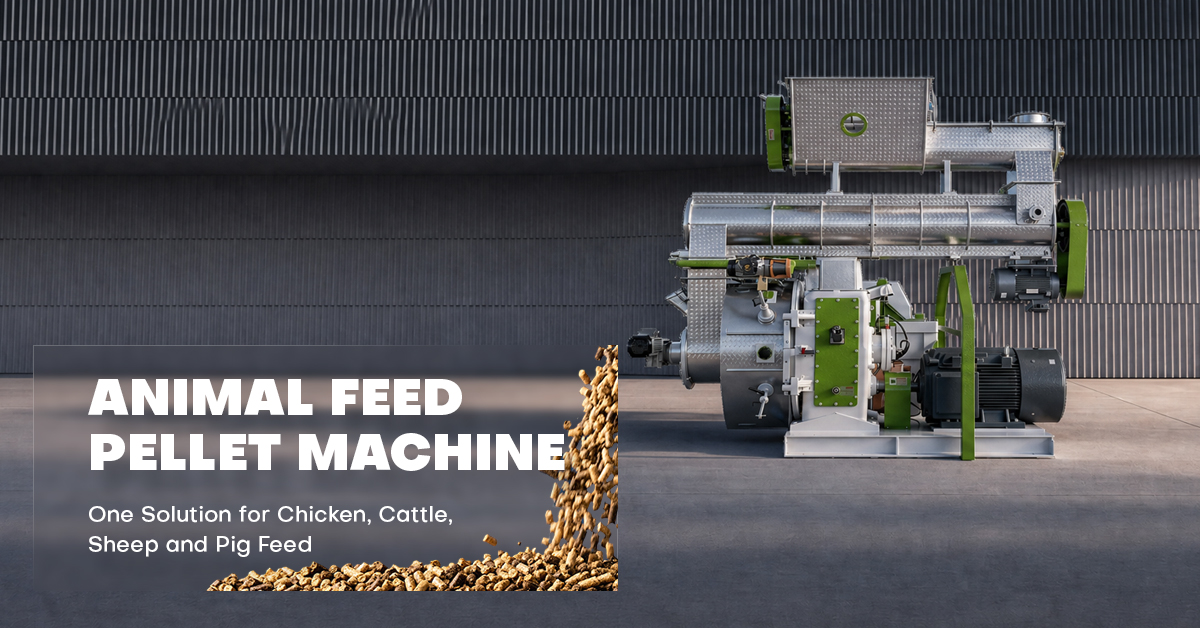
A Feed Granulator Machine can compress different prepared feed mixtures into pellets, but the operating conditions may need to change between formulas.
Important variables include:
- Die diameter
- Compression ratio
- Feeding rate
- Moisture
- Material composition
- Conditioning
A factory producing several pellet sizes should plan die changes and maintenance schedules carefully.
Rabbit Feed as a Small-Pellet Application
Rabbit feed often requires attention to fiber content and pellet size.
A manufacturer may use alfalfa, grass, bran, grains, protein sources, and mineral ingredients depending on the formula.
For a smaller commercial operation, a 1-2 T/H rabbit pellet machine for sale may offer a reasonable production scale.
The factory should still consider whether the same equipment can support future products.
If the business expects to add goat feed later, it may be worth designing storage, batching, and conveying systems with expansion in mind.
Goat Feed and Larger Production Requirements
Goat feed may be manufactured on a different production scale.
A commercial producer supplying multiple farms may require higher throughput and more automated handling.
A 2-3 T/H goat feed pellet making machine for sale can be considered for projects with moderate and stable feed demand.
However, the actual capacity should be verified against the formula.
Fibrous feed can sometimes process differently from grain-heavy formulas, so theoretical capacity should not be treated as a guaranteed output under every condition.
Alfalfa: A Special Case
Alfalfa can be used as a forage pellet or as an ingredient in complete feed.
Its fibrous structure requires appropriate grinding and feeding.
Moisture also needs to be monitored.
If alfalfa enters the factory too wet, drying may be required. If it has already been properly dried and stored, the additional drying stage may not be necessary.
A 3-4 T/H alfalfa pellet mill for sale may be considered when the available alfalfa supply and target market justify this scale.
The final equipment configuration should depend on whether the plant produces pure alfalfa pellets or complete formulated feed.
Can One Pellet Mill Serve Multiple Products?
Potentially, yes.
But there are several practical limitations.
Changing from one formula to another may require:
- Cleaning
- Die changes
- Recipe changes
- Feeding adjustments
- Moisture adjustments
- Production scheduling
For this reason, a factory should group similar products together when possible.
For example, producing several formulas with the same pellet diameter consecutively can reduce changeover time.
This is a simple production-planning strategy that can improve factory utilization.
What About Automation?
Automation becomes especially useful when the number of formulas increases.
A centralized system can control:
- Ingredient weighing
- Recipe selection
- Mixing
- Pelletizer feeding
- Temperature
- Cooling
- Packaging
Automation can also provide production records.
This allows managers to compare actual material consumption with the theoretical recipe.
Such information can help identify losses, inconsistencies, or equipment problems.
Why Industrial Feed Equipment Should Be Selected as a System
A common purchasing mistake is to select each machine independently.
For example, a buyer may choose a high-capacity pelletizer first and then discover that the mixer or cooler cannot match its output.
A better approach is to design the material flow first.
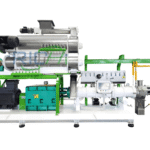
A commercial industrial animal feed equipment for sale package should be evaluated based on the relationship between machines rather than individual specifications.
The system should have balanced capacities.
The grinder should supply enough material.
The mixer should keep up with production.
The pelletizer should not overwhelm the cooler.
The screen should handle the cooled pellets.
The packaging system should match the finished product flow.
The Importance of Storage
Flexible feed production also requires flexible storage.
Different ingredients may need separate bins to prevent contamination and preserve quality.
Finished products may need dedicated storage areas according to formula and customer.
For example, rabbit feed should not be mixed with another product during handling.
Proper labeling and inventory management become increasingly important as the number of SKUs increases.
How Should Production Scheduling Work?
A flexible feed factory benefits from logical scheduling.
One approach is to group products according to:
- Pellet diameter
- Formula similarity
- Ingredient profile
- Customer requirements
For example, producing several formulas with the same pellet diameter may reduce die-change frequency.
Similarly, formulas using similar ingredients can reduce cleaning requirements.
Production planning therefore becomes part of equipment efficiency.
What Happens When Demand Changes?
Suppose a manufacturer originally expects 1 ton per hour but demand grows to 3 tons per hour.
If the original factory was designed with no expansion capacity, growth may require major reconstruction.
A better design can leave space for:
- Additional storage
- Larger conveyors
- More mixers
- Additional pelletizers
- Larger packaging systems
- Expanded electrical capacity
This creates a pathway for gradual expansion.
Managing Pellet Quality Across Different Formulas
Quality control should not rely on visual inspection alone.
Important parameters can include:
- Pellet diameter
- Moisture
- Density
- Durability
- Fines
- Ingredient composition
Different formulas may naturally behave differently.
A producer should therefore establish acceptable specifications for each product.
This allows operators to identify problems more quickly.
Why Cooling Conditions Matter
Cooling is particularly important when switching between products.
Fresh pellets contain heat generated during compression.
The cooler must reduce temperature sufficiently before the product enters storage.
If the system is not properly balanced, warm pellets may accumulate downstream.
This can slow packaging and increase storage risks.
The cooling stage should therefore be considered part of product quality control.
What Makes a Flexible Factory Economically Efficient?
Flexibility does not automatically mean higher efficiency.
Too many product changes can increase downtime.
The objective is to find a balance.
A flexible factory should be capable of producing multiple products while minimizing unnecessary changeovers.
This is where production planning, automation, storage, and equipment selection work together.
The ideal factory is not one that changes products every hour.
It is one that can respond to market demand without requiring major reconstruction.
When Should a Business Choose a Complete Plant?
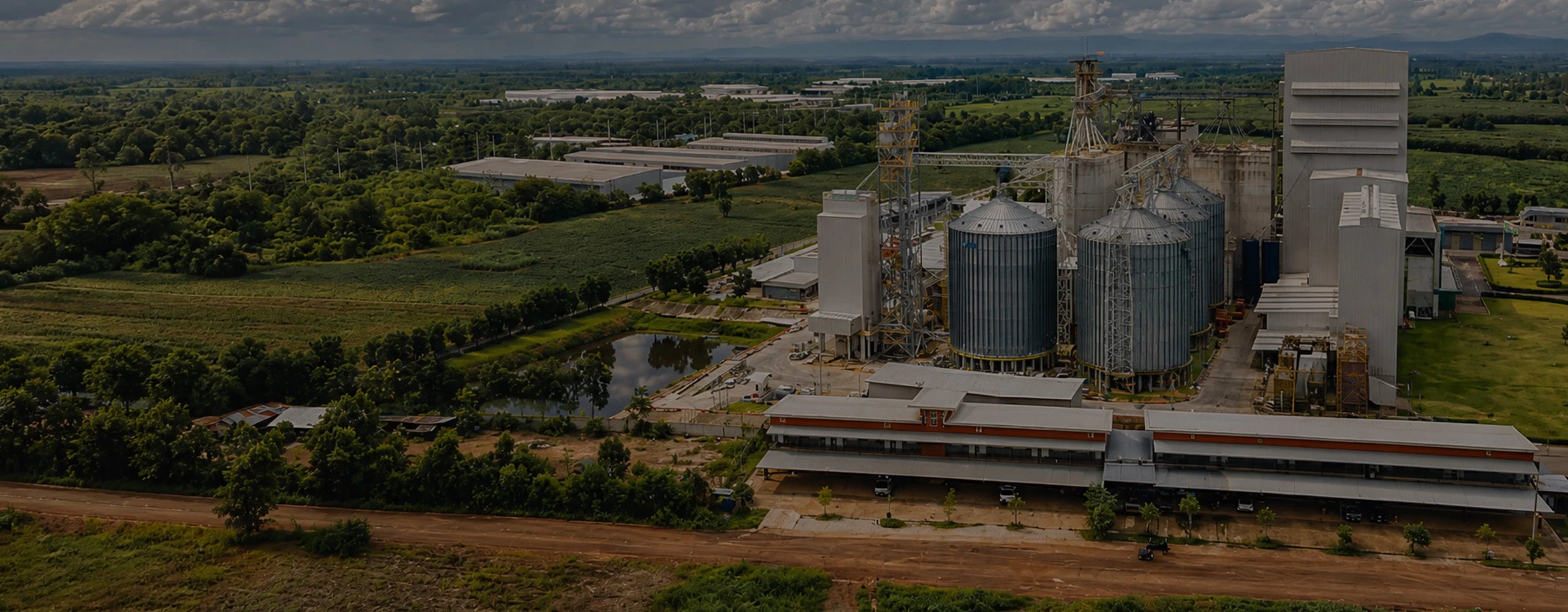
A complete plant is generally useful when a company is building a new facility or significantly expanding an existing one.
It provides an opportunity to coordinate:
Storage → Grinding → Batching → Mixing → Pelletizing → Cooling → Screening → Packaging
This can reduce compatibility issues.
For an existing feed mill that already has suitable grinders and mixers, adding a pelletizer may be sufficient.
The correct choice depends on current infrastructure.
Building Around the Customer
A flexible factory should ultimately be designed around customer requirements.
Different farms may want different pellet diameters, bag sizes, formulas, or delivery schedules.
The manufacturer needs enough flexibility to respond without creating excessive production costs.
This is why feed production should be treated as a business system rather than a machine purchase.
A Practical Equipment Checklist
Before designing a new facility, buyers can prepare:
Raw materials: What ingredients are locally available?
Products: Which animal species will be served?
Pellet sizes: How many diameters are required?
Capacity: What is the current and future production target?
Storage: How much raw material and finished feed must be stored?
Automation: Which operations should be automated?
Packaging: Bags, bulk, or both?
Expansion: What growth is expected over the next several years?
This information provides a much stronger foundation for equipment selection.
Final Perspective
A flexible feed factory does not have to be enormous.
It needs to be intelligently designed.
The most important elements are balanced equipment, appropriate storage, accurate batching, reliable mixing, suitable pelletizing, effective cooling, and organized production scheduling.
A Richi Pellet Mill can be considered as part of such a production strategy, but the main question should always be how the complete system fits the business.
When equipment is selected around actual formulas, raw materials, capacity, and customer requirements, one factory can potentially serve multiple livestock markets without sacrificing operational control.
For businesses researching different configurations, about this type of technical information can help explain why feed production should be planned as an integrated process rather than a collection of individual machines.
The future of feed manufacturing will likely belong not only to factories that can produce large volumes, but also to those that can respond efficiently to changing animal nutrition markets.