







Direct answer: verify a supplier’s pellet plant projects by building an evidence chain from public claim to customer-controlled confirmation. Match the project name or redacted identifier, country, material, capacity, delivery date, equipment scope, serial numbers, shipment or commissioning records, site imagery, and a reference conversation. No single photograph, video, map pin, or customer logo proves a project. Several independent, consistent pieces of evidence do.

Define what “genuine” means
A project can exist yet still be misrepresented. The supplier may have sold one machine rather than the advertised turnkey plant, supplied equipment but not commissioned it, participated as a subcontractor rather than principal contractor, or show a project that operates below the claimed capacity. Verification should cover identity, scope, date, performance boundary, and supplier role.
Write the claim exactly as used in the proposal: for example, “the supplier designed, manufactured, installed, and commissioned a 10 t/h wood pellet plant in Country X in 2024.” Every verb and number needs evidence. A vague claim is difficult to verify and easy to exaggerate.
Start with a structured reference table
Request at least three projects comparable in raw material, product, capacity, climate, and scope. For each, collect a project code, legal customer name where permission allows, country and region, commissioning year, design and actual operating range, equipment supplied, control scope, current status, and a customer contact. If confidentiality applies, use staged disclosure or a third-party verifier.
Compare the table with brochures, website pages, social posts, certificates, and proposal statements. Look for changes in capacity, date, or country. A corrected minor error may be understandable; repeated contradictions or copied project descriptions are red flags.
Verify the customer independently
Do not call only the mobile number provided by the salesperson. Find the customer’s official website, registry entry, business directory, trade association, or verified corporate contact. Ask the official channel to confirm that the named reference person works there and is allowed to discuss the project. Protect confidentiality and do not request proprietary production data.
During the reference call, ask open questions: what did the supplier actually provide, when did production start, which raw material is used, what was difficult during ramp-up, which performance boundaries were accepted, how are support cases handled, and what would the customer specify differently next time? Genuine operators usually describe concrete process details and limitations rather than repeating brochure language.
Reconcile images with physical details
Use reverse-image search where permitted, compare building features, equipment color and geometry, signs, terrain, utility layout, and weather. Request original files with metadata if the customer can share them, but recognize metadata can be removed or altered. Ask for a new live video from a specified viewpoint with a date code and a machine nameplate.
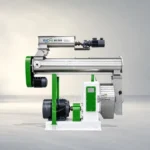
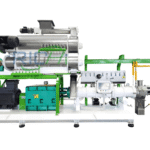
The photograph supplied with this article shows a large pellet-equipment factory, not an operating customer plant. The exact file is reused elsewhere in the batch. It therefore cannot substantiate a project claim. It can illustrate why factory photos and project photos must be kept in separate evidence categories.
Serial numbers connect factory and site
Select a major machine shown at the customer site and record its model and serial number with permission. Ask the supplier for a redacted manufacturing traveler, test record, packing list, invoice line, or shipment document that contains the same identifier. Dates should follow a plausible sequence from manufacture through shipment and commissioning.
Then compare the model with the claimed capacity and material. A serial-number match proves the machine’s identity and supply relationship more strongly than a generic green machine in a photograph. It still does not prove whole-plant performance; that requires operating evidence.
Use shipping and trade evidence carefully
Bills of lading, customs records, packing lists, certificates of origin, and freight documents can confirm movement between parties, but they may be confidential or incomplete. A shipment description can be generic. Verify dates, consignor, consignee, package count, weight, destination, and equipment identifiers without publishing sensitive information.
Trade databases and public records can support a claim but should not be treated as definitive. Group companies, freight forwarders, distributors, and project special-purpose entities can appear instead of the final user. Explain the relationship rather than assuming inconsistency proves fraud.
Operating evidence has a hierarchy
A signed acceptance certificate with defined conditions is stronger than a testimonial. Trend data showing throughput, current, energy, temperature, and product quality under a named test can be stronger than a short video. Laboratory results matter only when sampling and methods are known. Continuous commercial operation over months is different from a commissioning peak.
Ask for a redacted acceptance protocol, production summary, quality report, or operator log. Mark whether figures are measured, customer reported, supplier calculated, or marketing estimates. Never convert an anecdote into a guaranteed number for a new project.
Capacity claims need a boundary
Determine whether capacity refers to wet intake, dry material, press output, cooler discharge, or packed accepted pellets. Record raw material, initial and final moisture, pellet diameter, quality, operating duration, recycle, and downtime. A 10 t/h headline can describe different physical results depending on the boundary.
If a reference claims 10 t/h from wet biomass, check the mass balance. Moisture removal changes mass, and contaminants or fines reduce accepted output. Ask the supplier to explain the calculation rather than accepting the number because a customer confirms owning the line.
Verify the supplier’s role
Projects often involve technology suppliers, equipment manufacturers, engineering firms, local fabricators, installers, panel builders, and commissioning specialists. Request a responsibility matrix for the reference. The supplier may deserve credit for a pellet mill even if it did not build the dryer; it should not present another company’s turnkey work as its own.
Ask the customer which contracts and entities were involved. Compare names with the supplier’s legal entity and group structure. A trading or affiliated company can legitimately sell equipment, but the proposal must state who controls engineering and warranty.
A five-level evidence grade
- A: independent customer confirmation plus matching serial, documents, and defined operating evidence.
- B: customer confirmation and several consistent project documents, with limited performance data.
- C: plausible images and supplier records but no independent customer confirmation.
- D: marketing page, edited video, or testimonial with weak identifiers.
- Reject: proven copied media, contradictory legal entities, fabricated contact, or serial mismatch.
Protect the customer and the evidence
Obtain permission before contacting references, recording calls, or sharing documents. Redact commercial terms, formulas, employee details, and confidential production data. Store originals, note source and date, and separate supplier-provided evidence from independently collected evidence. Ethical verification is more likely to receive customer cooperation.
When to commission a third party
For a high-value project, use a qualified local inspector or engineering consultant to visit one reference or verify documents. Define the scope: identity, equipment, serial numbers, operating condition, records, and customer interview. The third party should disclose conflicts and not rely solely on the supplier’s itinerary.
Look for reuse patterns across the supplier’s portfolio
Export the supplier’s project pages into a simple index of image, caption, country, capacity, material, and date. Look for the same photograph assigned to different countries, identical customer quotations with changed names, repeated equipment serials, or a plant that appears under several brands. Reuse can have an innocent explanation, such as a group company or stock image, but the page should label it accurately.
Compare weather, clothing, vegetation, building details, control-screen language, electrical frequency, motor labels, and packaging. None is decisive alone. Together they can reveal that a claimed location or date is improbable and identify questions for the supplier.
Reconstruct the project timeline
Create a timeline from contract, approved drawings, manufacture, factory test, shipment, site readiness, installation, first production, performance test, and current operation. Evidence dates should follow the physical sequence. A “completed project” article dated before shipment or a performance claim immediately after first pellets deserves clarification.
Delays are not proof of poor capability; industrial projects often change. What matters is whether the supplier’s explanation, records, and customer account agree. Ask which delays were caused by design, logistics, site utilities, customer changes, or raw material. This makes the reference useful for planning instead of merely authenticating it.
Compare reference promises with your contract
Extract the conditions behind a verified reference: material, capacity boundary, product quality, utilities, operating hours, team, and test method. Place them beside the new proposal. If the new project is materially harder, do not treat the reference result as directly transferable. Require design margin, testing, or another closer case.
Use reference lessons to write acceptance clauses. If the previous customer struggled with wet feedstock, define moisture range and dryer responsibility. If ramp-up depended on a specialist, name that resource. Verification creates value only when findings change project controls.
Use payment safeguards proportional to evidence
Weak or incomplete references do not always require rejection, but they should affect risk allocation. Use smaller deposits, inspection milestones, documentary conditions, retention, performance security where appropriate, and final payment after defined acceptance. Obtain legal advice for the contract and jurisdiction. Do not let an unverified case study carry more weight than enforceable project evidence.
Final decision
A genuine project is supported by a consistent chain: real customer, identifiable site, defined supplier role, matching serial and shipment records, plausible dates, and operating evidence within clear boundaries. One missing item does not automatically invalidate the project, but unexplained contradictions reduce confidence.
Use several Grade A or B references that match the proposed material and scale before awarding a major pellet plant order. The purpose is not to prove that a supplier has ever completed a project; it is to determine whether its past evidence predicts competent delivery of yours.