



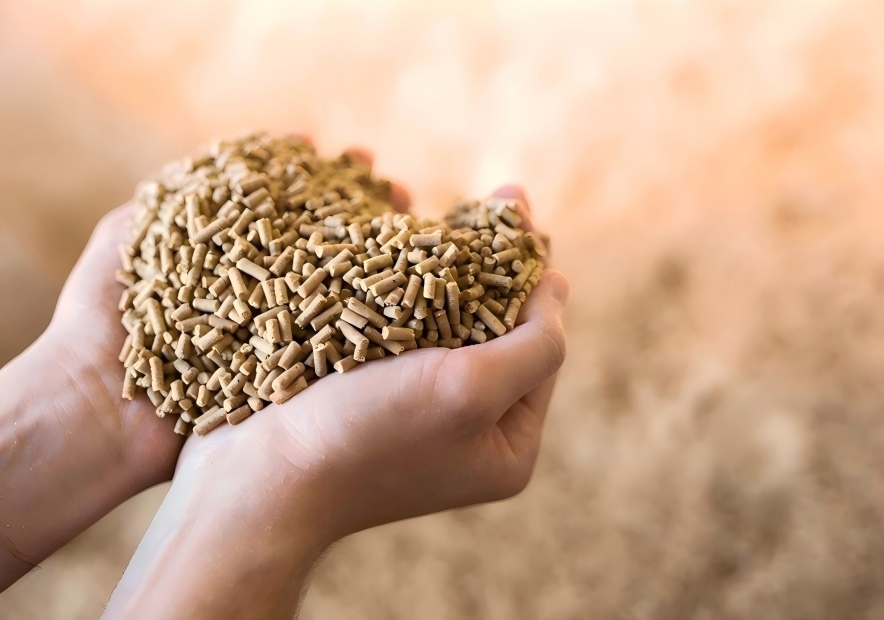
Cattle feed production efficiency has a direct impact on the operating cost, output, product consistency, and profitability of a feed manufacturing business. As cattle farming becomes increasingly commercialized, feed producers need to process larger quantities of raw materials while maintaining stable nutritional and physical quality. Simply increasing the speed of individual machines is not enough. Efficient cattle feed production requires coordination between raw materials, formulation, equipment, process parameters, factory layout, automation, energy management, and maintenance.
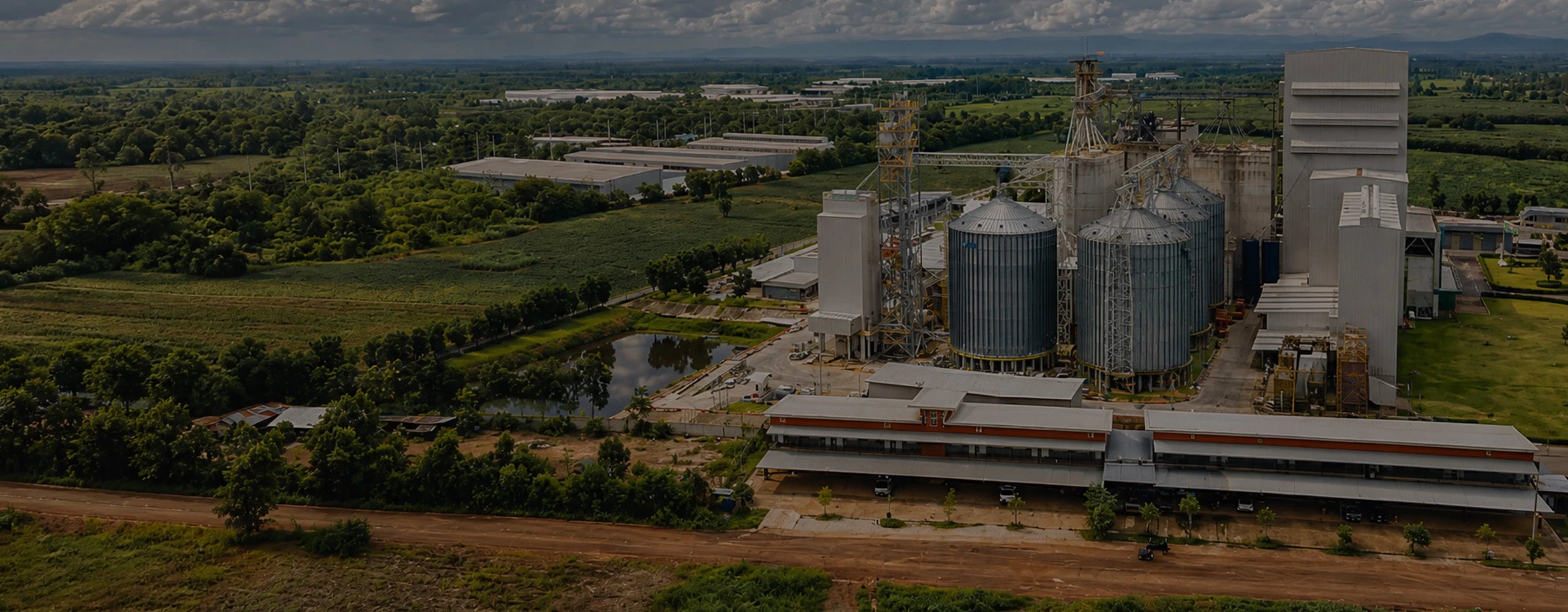
A modern cattle feed production line can integrate raw material cleaning, crushing, batching, mixing, conditioning, pelleting, cooling, screening, coating, and packaging into a continuous production system. When each stage is correctly matched, the plant can reduce unnecessary material movement, minimize production losses, improve equipment utilization, and maintain consistent feed quality.
Whether you are operating a small cattle feed plant or planning a large commercial feed factory, the following strategies can help improve production efficiency.
What Does Cattle Feed Production Efficiency Mean?
Cattle feed production efficiency is not simply measured by tons produced per hour.
A truly efficient feed plant needs to balance several factors, including:
- Production capacity
- Energy consumption
- Labor requirements
- Raw material utilization
- Pellet quality
- Equipment availability
- Production stability
- Maintenance costs
- Product changeover time
- Packaging efficiency
For example, a pellet mill may produce a high output, but if it creates excessive fines or requires frequent shutdowns, the overall factory may not actually be efficient.
Similarly, reducing energy consumption by lowering processing intensity may not be beneficial if pellet durability decreases and product losses increase.
Therefore, production efficiency should be considered from the perspective of the entire production system.
1. Start With the Right Feed Formula
The first step toward efficient production is to establish a practical feed formula.
Cattle feed may contain ingredients such as corn, barley, wheat bran, soybean meal, sunflower meal, cottonseed cake, rice bran, alfalfa, grass hay, straw, molasses, minerals, and vitamin premixes.
Each ingredient has different characteristics.
For example:
- Corn is relatively easy to grind and pelletize.
- Bran has different flow and density characteristics.
- Oilseed meals can affect pellet formation.
- Alfalfa and straw contain significant fiber.
- Molasses is sticky and requires controlled liquid addition.
- Mineral premixes are often included in relatively small quantities.
These differences affect the entire production process.
Before selecting equipment, feed manufacturers should analyze the actual ingredients and formulation. A machine configuration that works well for a grain-heavy concentrate feed may not be ideal for a high-fiber cattle feed formula.
Formula analysis therefore provides the foundation for efficient equipment selection and process design.
2. Select Raw Materials According to Processing Characteristics
Raw material quality affects production efficiency as much as nutritional composition.
Ingredients with excessive moisture, large foreign materials, inconsistent particle sizes, or poor storage conditions can create problems during processing.
For example, excessively wet material may increase energy requirements and affect pellet formation. Large foreign materials can cause blockages or damage equipment. Poorly stored ingredients may also require additional cleaning or handling.
Feed manufacturers should establish raw material specifications before production.
Important characteristics may include:
- Moisture content
- Particle size
- Bulk density
- Fiber content
- Oil content
- Impurity level
- Storage condition
Consistent raw materials make the production process easier to control and reduce unexpected interruptions.
3. Improve Raw Material Cleaning
Cleaning equipment is often overlooked when discussing production efficiency, but it has an important role.
Foreign materials such as stones, metal fragments, dust, and other impurities can reduce equipment performance.
A cleaning system can use screens, magnetic separators, aspiration, and other separation methods to remove unwanted materials before they enter the main production process.
This improves efficiency in two ways.
First, it protects crushers, mixers, pellet mills, and conveyors from unnecessary wear and damage.
Second, it improves the consistency of the material entering downstream equipment.
Preventing a machine failure is usually more efficient than stopping production to repair damaged equipment.
4. Optimize Grinding Efficiency
Grinding is one of the major energy-consuming processes in a cattle feed plant.
The goal is to achieve the appropriate particle size without unnecessary energy consumption.
If particles are too coarse, mixing and pellet formation may become more difficult. If materials are ground excessively fine, energy consumption can increase without providing a corresponding improvement in feed quality.
An industrial animal feed hammer mill should therefore be selected according to the raw materials and target particle size.
Grinding efficiency can be improved by:
- Selecting appropriate screen openings
- Maintaining sharp or suitable hammers
- Keeping the feed rate stable
- Preventing foreign materials from entering the mill
- Maintaining proper airflow
- Regularly inspecting wear components
For high-fiber ingredients, additional preparation may be necessary before grinding.
5. Use Accurate Batching Systems
Accurate batching is essential for both feed quality and production efficiency.
Manual weighing can be time-consuming and may introduce errors, especially when many ingredients are used.
Automated batching systems can weigh ingredients according to the predefined formulation.
A typical system may use separate bins or hoppers for major ingredients and dedicated dosing equipment for smaller components.
Accurate batching provides several advantages:
- Faster ingredient preparation
- Reduced labor
- Better formula consistency
- Lower material waste
- Easier formula changes
- Better production records
For commercial plants producing multiple feed formulas, automated batching can significantly simplify production management.
6. Improve Mixer Performance
A mixer should produce a uniform feed mixture within a reasonable mixing time.
Poor mixing can create nutritional inconsistencies and may also affect pellet quality.
Factors affecting mixing efficiency include:
- Mixer design
- Ingredient sequence
- Particle size
- Moisture
- Filling level
- Mixing time
- Addition method for liquid ingredients
Overfilling a mixer may reduce mixing performance, while underfilling can reduce production efficiency.
The ideal operating conditions should therefore be established through testing and process optimization.
7. Control Liquid Ingredient Addition
Ingredients such as molasses can be useful in cattle feed formulas, but they can also influence production efficiency because of their sticky nature.
If molasses is added unevenly, it may form localized concentrations and affect material flow.
A controlled liquid addition system can distribute molasses more evenly throughout the mixture.
Spraying rather than uncontrolled pouring can improve distribution.
The addition point also matters. Depending on the formula and process design, liquid ingredients may be introduced during mixing or at another suitable stage.
The goal is to achieve uniform distribution without causing excessive sticking or blocking.
8. Optimize Steam Conditioning
Conditioning is particularly important for pellet production.
Before entering the pellet mill, the feed mixture can be conditioned with steam to increase temperature and moisture.
Proper conditioning can improve material plasticity and particle binding, which may increase pellet durability and improve pellet mill performance.
However, conditioning that is poorly controlled can create problems.
Too little moisture or heat may result in weak pellets and unstable production. Excessive moisture can make the material difficult to process and may increase the load on downstream cooling equipment.
Efficient conditioning therefore requires a balance between:
- Steam addition
- Feed rate
- Temperature
- Moisture
- Retention time
- Formula characteristics
The optimal conditions vary according to the feed formula.
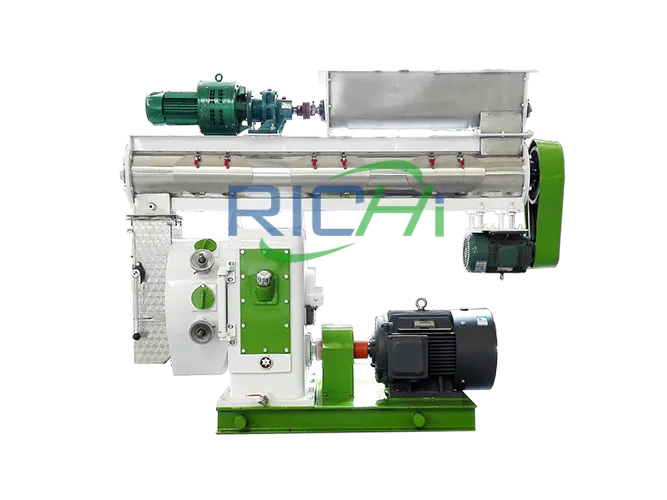
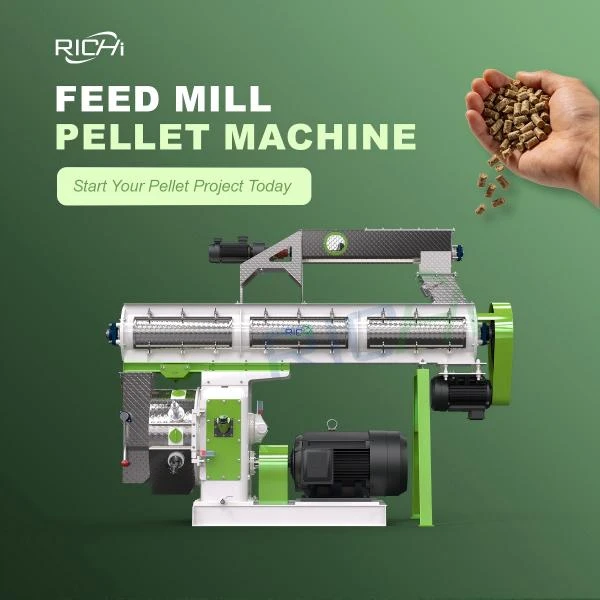
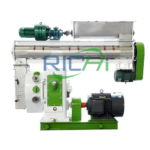
9. Choose the Right Pellet Making Machine for Cattle Feed
The pellet mill is one of the most important pieces of equipment in a cattle feed production line.
A properly selected pellet making machine for cattle feed can help improve production output while maintaining consistent pellet quality.
When choosing a pellet mill, consider:
Production Capacity
The machine should match the required hourly output.
If the machine is too small, it may become the main bottleneck. If it is significantly oversized, the investment and operating costs may be unnecessarily high.
Feed Formula
High-fiber cattle feed can require different compression conditions from concentrate feed.
The pellet mill should therefore be selected according to the actual raw materials.
Pellet Diameter
The required pellet diameter affects die selection.
Different cattle feed products may require different pellet sizes according to cattle age, feed type, and customer requirements.
Die and Roller Quality
The die and rollers are critical wear components.
Their condition directly affects compression and pellet formation. Wear-resistant components can help maintain stable production and reduce unexpected downtime.
Drive System
A stable drive system helps maintain consistent machine operation under changing loads.
Safety Features
Overload protection and other safety mechanisms can protect the equipment and reduce the risk of serious failures.
The pellet mill should not be selected independently. Its capacity needs to match the crusher, mixer, conditioner, cooler, screening system, and packaging system.
https://richipelletizer.com/cattle-feed-pellet-mill-for-sale
10. Maintain Stable Pellet Mill Feeding
Even a high-performance pellet mill cannot operate efficiently if the material supply is unstable.
If the pellet mill receives too little material, production capacity is underutilized.
If the material feed is excessive or inconsistent, the machine may become overloaded.
A controlled feeding system helps maintain a stable material flow.
The conditioner and feeder should therefore be coordinated with the pellet mill.
Stable feeding can improve:
- Hourly output
- Pellet consistency
- Energy efficiency
- Machine stability
- Die and roller utilization
This is a relatively simple but important way to improve overall production efficiency.
11. Maintain the Die and Rollers
The die and rollers gradually wear during operation.
As wear increases, compression conditions may change. This can lead to lower output, poorer pellet quality, or higher energy consumption.
Regular inspection should therefore be part of the maintenance program.
Operators should monitor:
- Die surface condition
- Roller wear
- Roller gap
- Lubrication
- Abnormal vibration
- Machine load
- Pellet appearance
Timely maintenance can prevent small problems from becoming major production interruptions.
12. Improve Pellet Cooler Efficiency
Fresh pellets need to be cooled before screening and packaging.
An inefficient cooler can become a bottleneck, especially when pellet mill output increases.
The cooling system should provide sufficient airflow and capacity for the actual pellet production rate.
Proper cooling helps stabilize pellets and reduce moisture.
Efficient cooling also prevents the packaging system from receiving excessively warm product.
This is particularly important in large plants where thousands of kilograms of pellets may pass through the system every hour.
13. Reduce Fines Through Proper Screening
Excessive fines reduce effective product output.
For example, if a plant produces 10 tons of pellets but a significant portion becomes fines, the actual amount of qualified finished feed is lower than the nominal production capacity.
A properly configured screening system separates qualified pellets from broken material.
Fines can potentially be returned to the production process depending on the plant design.
Reducing fines therefore improves raw material utilization and increases the percentage of saleable product.
14. Optimize Material Conveying
Conveying systems are another important part of feed production efficiency.
A cattle feed factory may use:
- Belt conveyors
- Screw conveyors
- Bucket elevators
- Chain conveyors
- Pneumatic conveying systems
The conveying system should be designed to move materials efficiently while minimizing unnecessary transport distances.
An inefficient factory layout can increase:
- Material handling time
- Energy consumption
- Equipment wear
- Risk of material contamination
- Labor requirements
A well-planned layout creates a logical material flow from receiving to finished-product storage.
15. Reduce Production Bottlenecks
A feed production line operates as a chain.
The overall capacity is limited by its bottleneck.
For example, a production line may have:
- A crusher capable of 15 t/h
- A mixer capable of 12 t/h
- A pellet mill capable of 10 t/h
- A cooler capable of 15 t/h
In this example, the pellet mill limits the effective production capacity.
Therefore, improving one machine alone may not increase total production.
Feed plant designers should evaluate the capacity balance of the entire line.
Each major section should be properly matched so that materials can move continuously from one stage to another.
16. Improve Factory Layout
Factory layout can have a significant influence on efficiency.
A good layout should consider:
- Raw material storage
- Production equipment
- Finished-feed storage
- Material flow
- Maintenance access
- Worker movement
- Electrical systems
- Dust control
- Future expansion
The production flow should be as direct as practical.
Unnecessary material movement increases both time and energy consumption.
A customized layout can also make equipment maintenance easier by providing sufficient access around major machines.
17. Use Automation to Reduce Manual Operations
Automation is one of the most effective ways to improve consistency in large cattle feed factories.
A centralized control system can coordinate:
- Raw material dosing
- Crushing
- Mixing
- Conditioning
- Pelletizing
- Cooling
- Screening
- Packaging
Automation can reduce repetitive manual work and help operators monitor production parameters.
It can also make product changes easier because different feed formulas can be programmed into the control system.
The appropriate automation level depends on production capacity, investment budget, labor availability, and management requirements.
18. Monitor Energy Consumption
Energy efficiency should be evaluated throughout the production process.
Major energy-consuming machines include crushers and pellet mills.
Operators can track electricity consumption per ton of finished feed to identify abnormal conditions.
An increase in energy consumption may indicate:
- Worn components
- Excessively fine grinding
- Incorrect die configuration
- Poor conditioning
- Overloaded equipment
- Material blockages
- Inefficient motors
Monitoring energy use provides another method for identifying production problems.
19. Establish Preventive Maintenance
Unexpected equipment failure is one of the biggest causes of production downtime.
Preventive maintenance reduces this risk by inspecting and servicing equipment before serious failures occur.
A maintenance plan should cover:
Hammer Mills
Check hammers, screens, bearings, and drive components.
Mixers
Inspect paddles, shafts, bearings, and seals.
Pellet Mills
Check dies, rollers, bearings, lubrication, and drive components.
Coolers
Inspect fans, screens, airflow channels, and discharge systems.
Conveyors
Check belts, chains, bearings, sprockets, and tension.
Packing Machines
Inspect weighing systems, sensors, sealing mechanisms, and bags.
A maintenance schedule should be based on operating hours and equipment manufacturer’s recommendations.
20. Train Operators Properly
Equipment alone cannot guarantee efficient production.
Operators need to understand how the production system works.
Training should cover:
- Normal operating procedures
- Equipment start-up and shutdown
- Formula management
- Pellet mill operation
- Safety procedures
- Lubrication
- Routine inspection
- Troubleshooting
- Emergency response
Well-trained operators can identify abnormal vibration, temperature, noise, material flow, and pellet quality before these issues cause major failures.
21. Monitor Pellet Quality During Production
Production efficiency should never be separated from product quality.
Operators should regularly inspect:
- Pellet diameter
- Pellet length
- Pellet durability
- Fines content
- Moisture
- Appearance
- Density
If pellet quality changes suddenly, the operator should investigate the cause.
Possible causes include:
- Raw material changes
- Moisture variation
- Conditioning problems
- Die wear
- Roller adjustment
- Feeding instability
- Cooling problems
Early detection prevents large quantities of off-specification product from being produced.
22. Minimize Product Changeover Time
Commercial feed factories often produce several cattle feed formulas.
Every formula change can require adjustments to batching, mixing, pelleting, and packaging.
Long changeover times reduce productive hours.
Production scheduling can therefore improve efficiency.
For example, formulas with similar raw materials or pellet specifications can sometimes be scheduled consecutively, reducing cleaning and equipment adjustment requirements.
Proper planning can increase effective production time without increasing machine speed.
23. Use a Flexible Production Line
A modern cattle feed factory may need to produce several different products.
A flexible production line can handle changes in:
- Feed formula
- Pellet diameter
- Raw materials
- Production capacity
- Packaging size
Flexibility is particularly valuable for commercial manufacturers serving different customers.
However, flexibility should be planned during the engineering stage. It may require multiple ingredient bins, additional dosing systems, interchangeable dies, or suitable process control software.
24. Improve Dust Management
Dust can be generated during raw material handling, grinding, mixing, conveying, and packaging.
Excessive dust can reduce working conditions and contribute to material losses.
Dust collection systems can help capture airborne particles.
Improved dust management can also help maintain cleaner equipment and production areas.
The dust-control system should be integrated into the factory layout rather than added as an afterthought.
25. Improve Packaging Efficiency
Packaging is the final production stage and can become a bottleneck if its capacity is too low.
Automatic packing machines can weigh and fill bags consistently.
For large feed plants, automated bagging and palletizing systems can reduce labor requirements and improve finished-product handling.
Packaging equipment should be matched to the pellet production capacity.
There is little benefit in increasing pellet mill output if the packaging system cannot process the additional feed.
26. Use Data to Optimize Production
Modern feed factories can collect data from different production stages.
Useful indicators may include:
- Tons produced per hour
- Electricity consumption per ton
- Pellet mill utilization
- Mixer cycle time
- Crusher output
- Percentage of fines
- Equipment downtime
- Maintenance frequency
- Product changeover time
Analyzing these indicators can help identify bottlenecks and opportunities for improvement.
For example, if pellet mill output is consistently below its rated capacity, the cause may be upstream material supply, conditioning, formula characteristics, die configuration, or equipment wear.
Data helps operators investigate the actual cause rather than relying on assumptions.
27. Design the Production Line Around Actual Capacity
One common mistake in feed plant investment is choosing equipment based only on the desired final capacity.
The complete production system should be balanced.
For example, a 20 t/h cattle feed plant may require:
- Raw material handling sized for the target throughput
- Adequate grinding capacity
- Sufficient batching capacity
- Mixers capable of handling the required batch size
- Appropriate pellet mill capacity
- Cooling capacity matching pellet production
- Screening capacity matching the cooler
- Packaging capacity matching finished-feed output
If one stage is undersized, it may restrict the capacity of the entire plant.
28. Consider Future Expansion
Efficiency is also related to long-term planning.
A factory may initially produce 5 t/h but later expand to 10 or 20 t/h.
If expansion is considered during the original design stage, the factory layout can reserve space for additional equipment.
Electrical systems, material storage, conveyors, and control systems can also be designed with future upgrades in mind.
This can reduce the cost and disruption associated with later expansion.
29. Why Turnkey Engineering Can Improve Efficiency
For investors without extensive feed-processing experience, turnkey engineering can simplify the development of a cattle feed factory.
A turnkey project can integrate:
- Process design
- Equipment selection
- Factory layout
- Equipment manufacturing
- Transportation
- Installation
- Commissioning
- Operator training
- After-sales technical support
The key advantage is process coordination.
For example, the capacity of the crusher, mixer, pellet mill, cooler, screen, and packaging system can be calculated and matched as one system.
This reduces the risk of buying machines that are individually suitable but poorly matched as a production line.
30. A Practical Checklist for Improving Cattle Feed Production Efficiency
Feed manufacturers can use the following checklist to evaluate their existing plant:
Raw materials
- Are ingredients consistent in quality?
- Are moisture and impurity levels controlled?
- Are raw materials stored properly?
Grinding
- Is the particle size appropriate?
- Is the hammer mill operating efficiently?
- Are wear components maintained?
Batching and mixing
- Are ingredients weighed accurately?
- Is the mixture uniform?
- Is mixing time optimized?
Conditioning
- Is steam distributed consistently?
- Is moisture controlled?
- Is the conditioning temperature appropriate?
Pelleting
- Is the pellet mill correctly sized?
- Are the die and rollers in good condition?
- Is material feeding stable?
- Is pellet quality consistent?
Cooling and screening
- Is the cooler large enough for the production capacity?
- Is final moisture appropriate?
- Is the fines level controlled?
Automation
- Are major processes automated?
- Can operators monitor production data?
- Are alarms and safety systems working properly?
Maintenance
- Is preventive maintenance scheduled?
- Are spare parts available?
- Are operators properly trained?
This checklist can help identify where improvements will have the greatest practical impact.
Conclusion
Improving cattle feed production efficiency requires a system-wide approach. It is not simply a matter of installing a faster machine or increasing the operating speed of a pellet mill.
Efficient production begins with appropriate raw materials and a practical feed formula. Cleaning and grinding prepare ingredients for consistent processing. Accurate batching and effective mixing improve formula uniformity. Proper conditioning prepares the material for pelleting, while a correctly selected pellet making machine for cattle feed helps produce stable and uniform pellets.
Cooling, screening, conveying, packaging, automation, and maintenance then determine how efficiently the finished product can move through the factory.
For feed manufacturers planning a new plant, the best results come from matching every stage of the production line to the required capacity, feed formula, raw materials, pellet specifications, and automation level. For existing factories, monitoring production data, reducing bottlenecks, improving preventive maintenance, optimizing conditioning, and maintaining the pellet mill can provide practical opportunities for improvement.
Ultimately, high production efficiency means producing the required quantity of cattle feed with consistent quality, controlled energy consumption, minimal waste, and reliable equipment performance. A properly engineered and well-managed cattle feed production line can provide the foundation for stable operation and long-term production growth.