


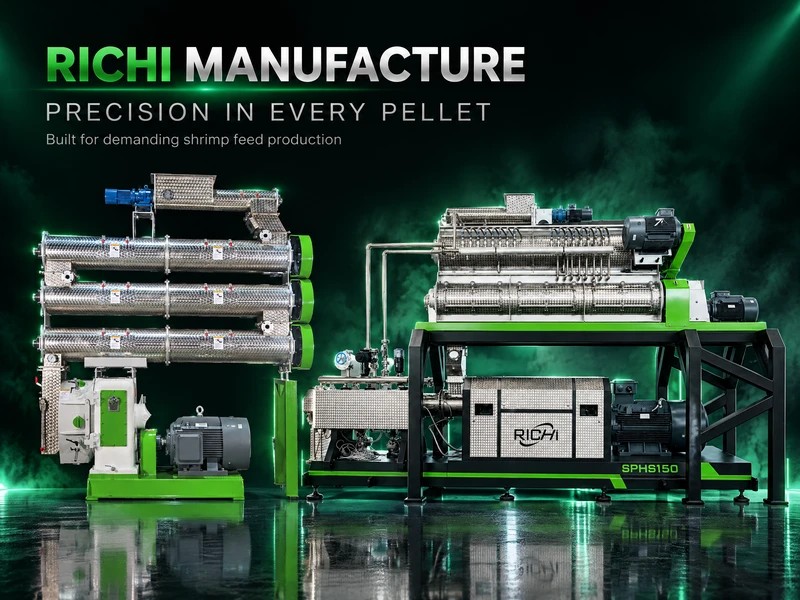
Aquaculture markets are rarely static. Feed manufacturers may begin by serving one shrimp species and later expand into fish or other aquatic products. This makes flexibility an important consideration when selecting a shrimp feed pellet machine and planning the surrounding production equipment.
Why Flexibility Matters
A factory designed around only one product can become difficult to adapt when market demand changes. A more flexible system may allow the manufacturer to adjust pellet sizes, formulations, and production schedules without replacing the entire processing line.
Flexibility starts with process planning. The grinding system, mixer, conditioner, pellet mill, cooling system, screening equipment, and packaging section should be evaluated according to the range of products the factory expects to produce.
Supporting Different Feed Formulations
Different aquatic species can require different nutritional profiles. Even when the basic processing sequence remains similar, the formula and physical properties of the feed may change.
The raw material handling system therefore needs to accommodate the ingredients used by the business. Accurate batching and effective mixing become especially important when formulations change frequently.
Pellet Size and Product Variety
Shrimp feed often requires smaller pellet dimensions than many conventional animal feeds. A production line serving several growth stages may therefore need the ability to manufacture different pellet sizes.
Die selection is one of the main factors affecting pellet diameter. Cutter adjustment and operating conditions also influence pellet dimensions.
A flexible factory should make these changes practical without creating excessive downtime.
Combining Fish and Shrimp Feed
A fish feed production plant can potentially support multiple aquatic feed products when its equipment configuration is properly designed. Fish and shrimp products can share several processing stages, including raw material preparation, mixing, conditioning, cooling, screening, and packaging.
However, the equipment must still be selected according to the specific characteristics of the intended products. A configuration suitable for one product should not automatically be assumed to be ideal for another.
Managing Production Changeovers
Product changeovers require attention to material residues and production sequence. The factory layout should make cleaning and inspection practical.
Storage bins and conveying routes should also be arranged so that different ingredients can be managed efficiently. In facilities with several products, thoughtful material flow can reduce operational complexity.
Expansion Planning
Production capacity can change as the customer base develops. A company may initially need a moderate output and later add additional pellet mills, larger storage systems, or more automated packaging.
Future expansion is easier when the original factory layout leaves sufficient room for additional equipment and provides suitable infrastructure connections.
For investors comparing different solutions, why not try here as a starting point for broader research into equipment configuration, production processes, and engineering services before deciding on a final layout.
The Role of Equipment Suppliers
A flexible project requires more than standard equipment. The supplier should understand how individual machines interact and be able to adjust the system to customer requirements.
The wood pellet mill is obviously associated with biomass applications rather than aquatic feed, but the broader lesson is useful: pelletizing equipment must always be selected according to the material, formulation, pellet specification, and intended production process.
The same principle applies to shrimp and fish feed.
Creating a Long-Term Production Platform
The objective of flexible design is not to make every machine capable of doing everything. Instead, it is to create a practical production platform that can support the products the business is realistically expected to manufacture.
By considering current demand, future product development, raw material availability, pellet specifications, capacity, and factory expansion at the beginning, investors can create a production system that remains useful as the aquaculture business evolves.
View details: https://www.richimanufacture.com/shrimp-feed-pellet-machine/